
12 Signs Your Cat Is Stressed
You may love sharing your meals with your cat but some of the most common foods in your kitchen can be seriously dangerous, even deadly, for your feline. From chocolate to garlic, grapes to xylitol, the list of toxic foods is longer and more surprising than most owners realize. Read on to discover exactly which 15 human foods you should never let your cat near, and what to do if accidental exposure happens.
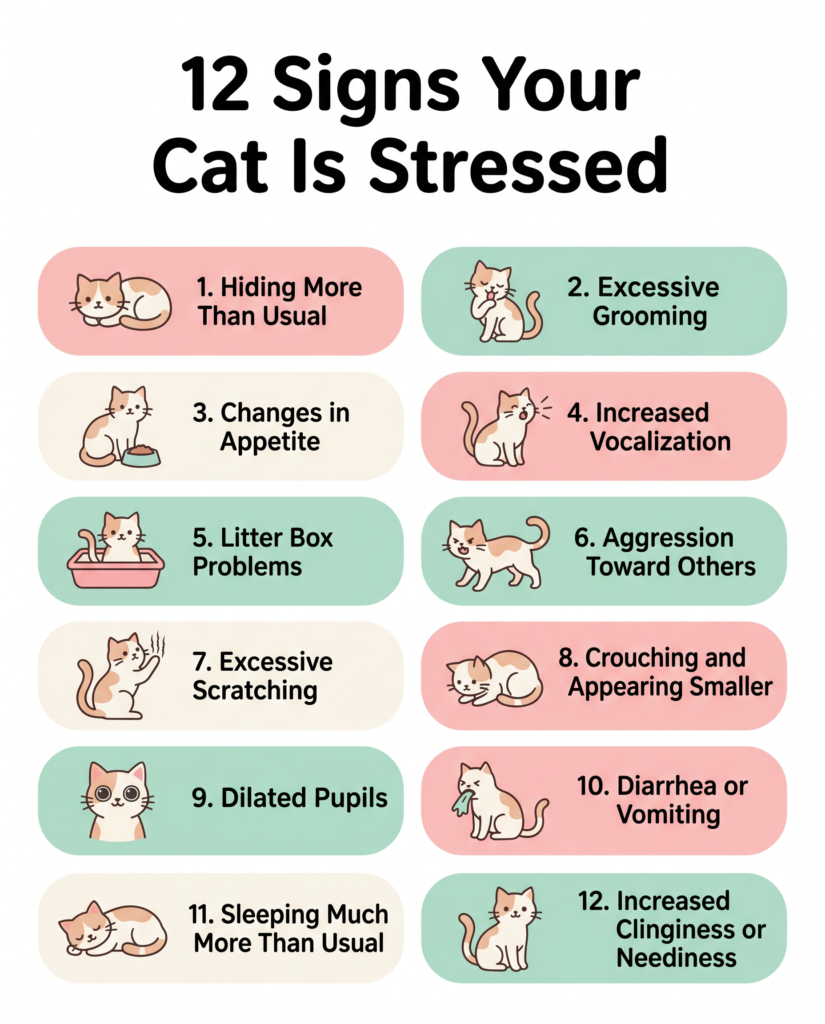
1. Hiding More Than Usual
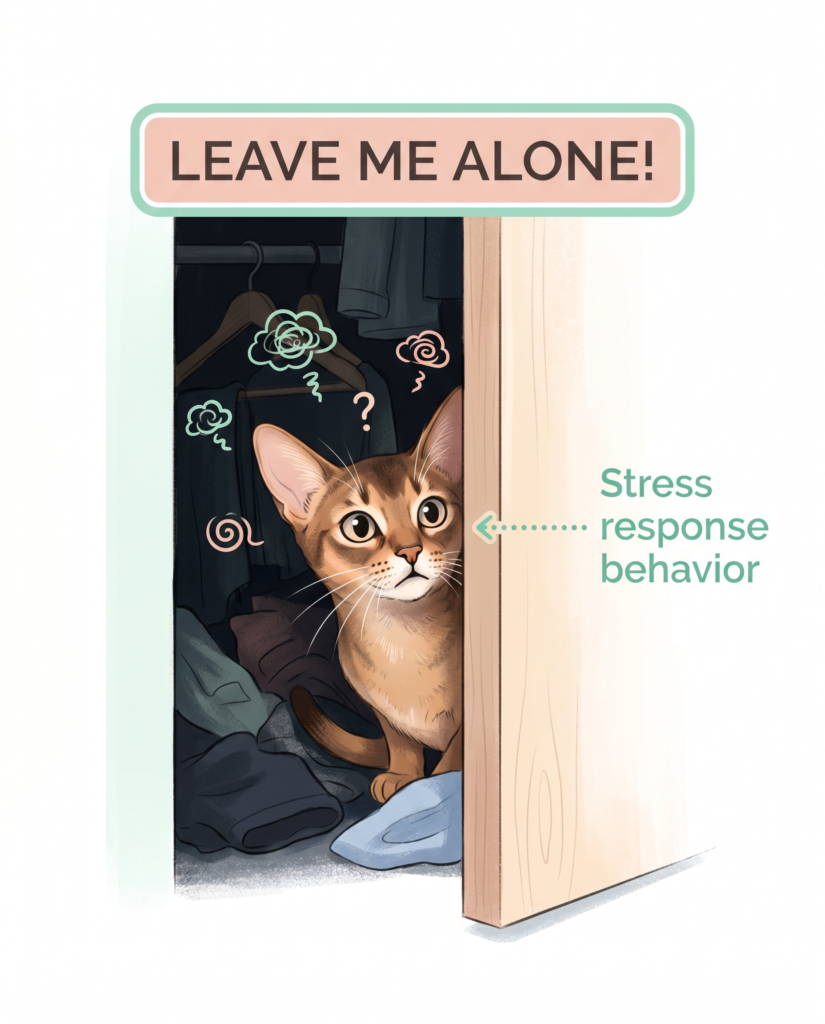
A cat who suddenly starts spending significantly more time hiding in unusual places is almost certainly experiencing stress or anxiety. Cats retreat to small, enclosed spaces when they feel overwhelmed because confined spaces feel safer and more controllable than open environments. While all cats hide occasionally, a sudden and dramatic increase in hiding behavior is a red flag. Common triggers include a new pet in the home, a new baby, visitors, loud noises, or changes in the household routine. If your cat has taken to hiding under the bed, inside closets, or in other unusual spots for extended periods, take it seriously. Forcing them out will only increase their stress instead focus on identifying and addressing the source of their anxiety.
2. Excessive Grooming or Over-Grooming
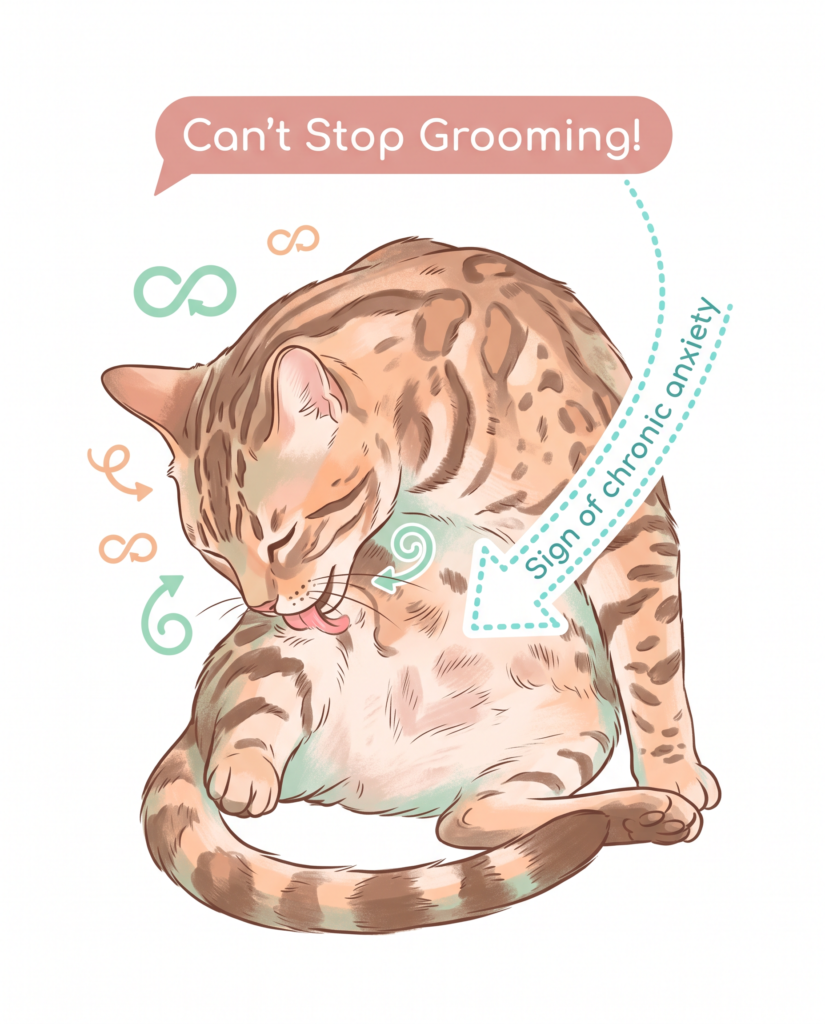
While cats are naturally clean animals, grooming that goes beyond normal maintenance into compulsive territory is a classic stress response. A stressed cat may lick, chew, or pull at their fur so repeatedly that they develop bald patches, skin irritation, or sores. This behavior known as psychogenic alopecia — is the feline equivalent of stress-related habits in humans like nail biting or hair pulling. The repetitive motion of grooming releases endorphins that temporarily soothe anxiety, making it a self-reinforcing behavior. The belly, inner thighs, and base of the tail are the most commonly over-groomed areas. If you notice thinning fur or bald spots that your vet cannot attribute to a medical cause, stress is almost certainly the culprit.
3. Changes in Appetite
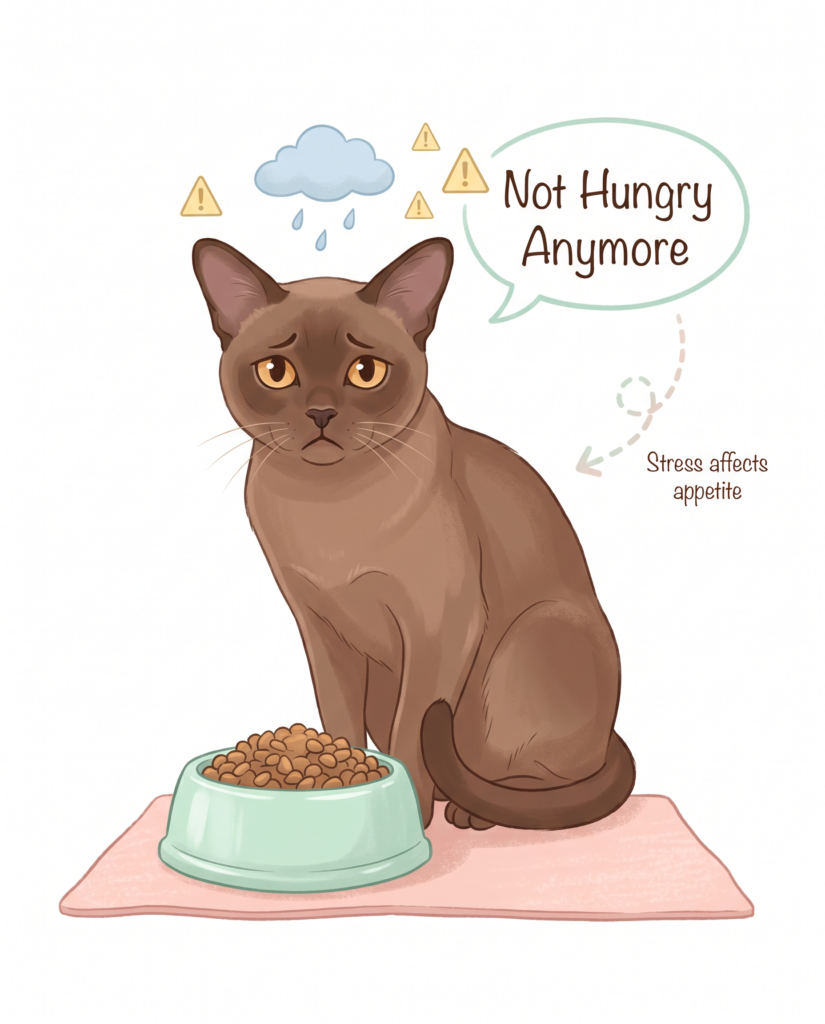
Stress significantly impacts a cat’s relationship with food. Some stressed cats stop eating almost entirely a particularly dangerous situation since cats who go without food for more than 24-48 hours are at risk of developing hepatic lipidosis, a serious liver condition. Other cats respond to stress by eating compulsively, seeking comfort in food the way stressed humans sometimes do. Either extreme is worth monitoring closely. Sudden changes in appetite especially when combined with other signs on this list should always prompt a conversation with your vet to rule out medical causes before attributing them purely to stress.
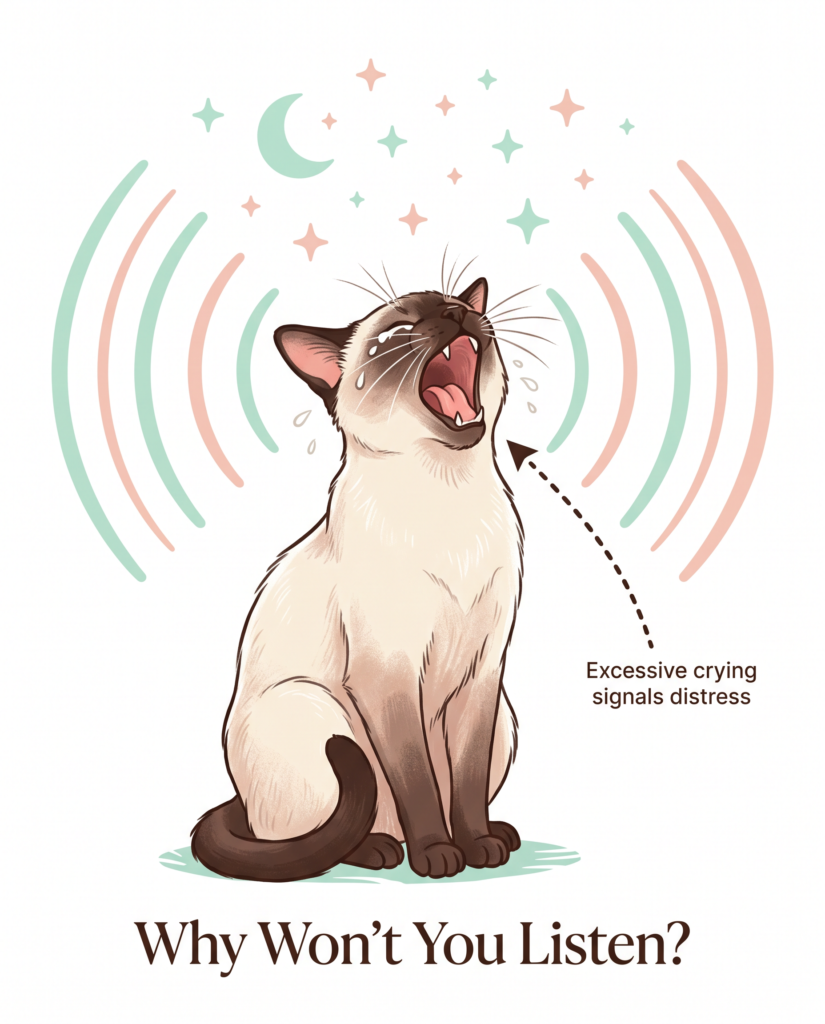
4. Increased Vocalization
A cat who suddenly becomes much more vocal than usual crying, yowling, or meowing excessively especially at night may be experiencing significant stress or anxiety. While some breeds like Siamese are naturally more vocal, a sudden change in your individual cat’s vocalization patterns is always meaningful. Stressed cats may cry out as a way of expressing distress, seeking reassurance, or communicating that something in their environment feels wrong. Nighttime vocalization is particularly common in anxious cats who feel more vulnerable when the house is quiet and dark. Always investigate sudden increases in vocalization rather than dismissing them as attention seeking.
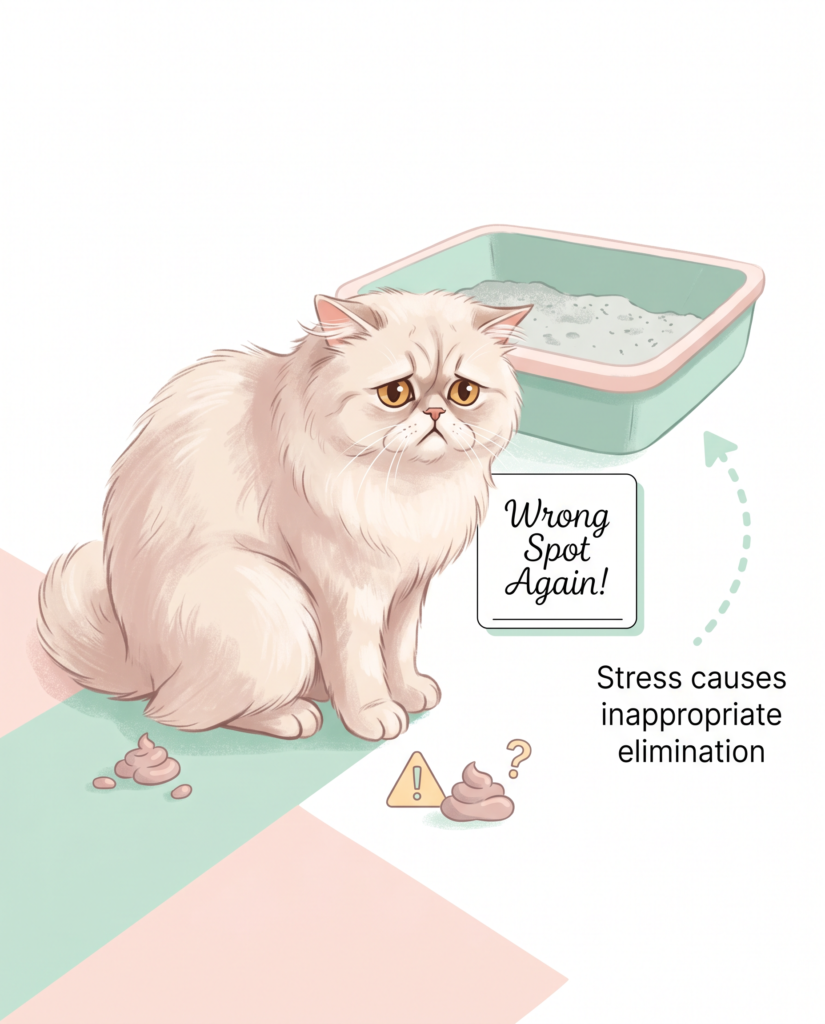
5. Litter Box Problems
Inappropriate elimination urinating or defecating outside the litter box is one of the most common and frustrating manifestations of feline stress. A cat who has always been reliably litter trained but suddenly starts going elsewhere is almost always communicating that something is wrong. Stress can cause cats to associate the litter box with negative feelings, leading them to seek alternative locations. Some stressed cats will urinate on their owner’s belongings specifically this is not spite but rather an attempt to mix their scent with yours for comfort. Always rule out medical causes like urinary tract infections first, but if your vet gives the all clear, stress is the most likely explanation.
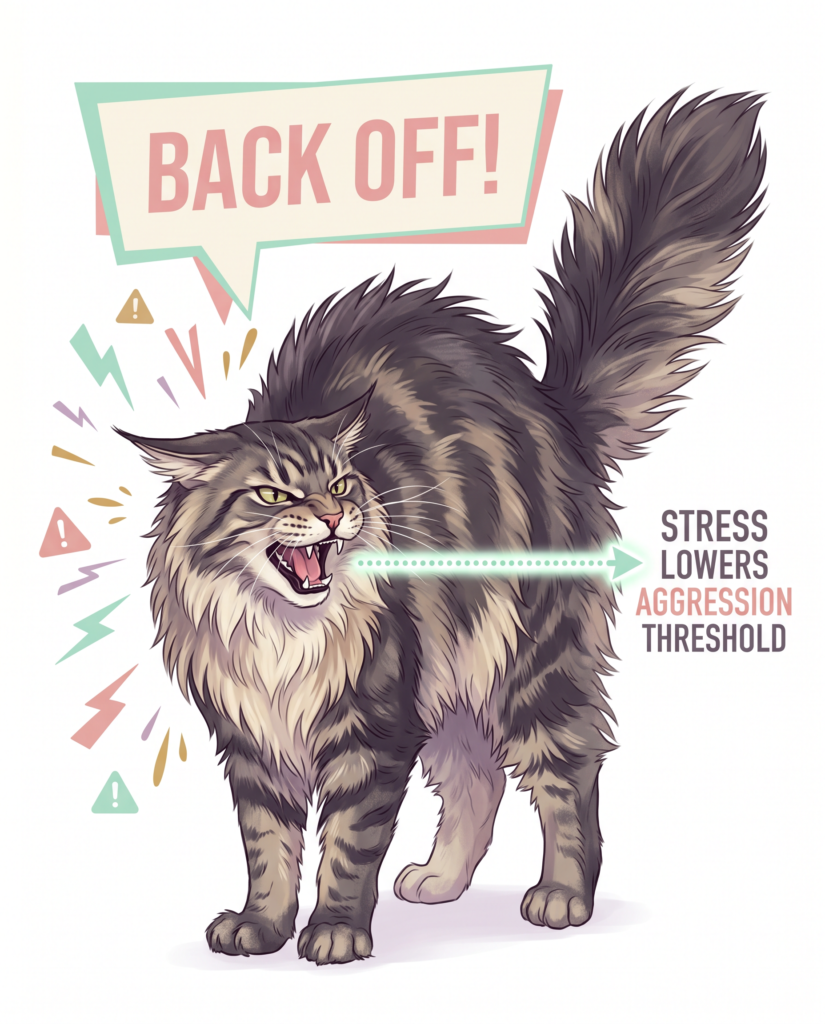
6. Aggression Toward People or Other Pets
A normally gentle and friendly cat who suddenly becomes aggressive hissing, scratching, biting, or attacking without obvious provocation is almost certainly a stressed cat. Stress lowers a cat’s threshold for reactive behavior, meaning things that would normally be tolerable become unbearable. This redirected aggression is particularly common when a new pet is introduced, when the household routine changes dramatically, or when something frightening happens. Never punish a stressed cat for aggression it will only deepen their anxiety. Instead focus on identifying and removing the stressor while giving your cat safe spaces to retreat to.
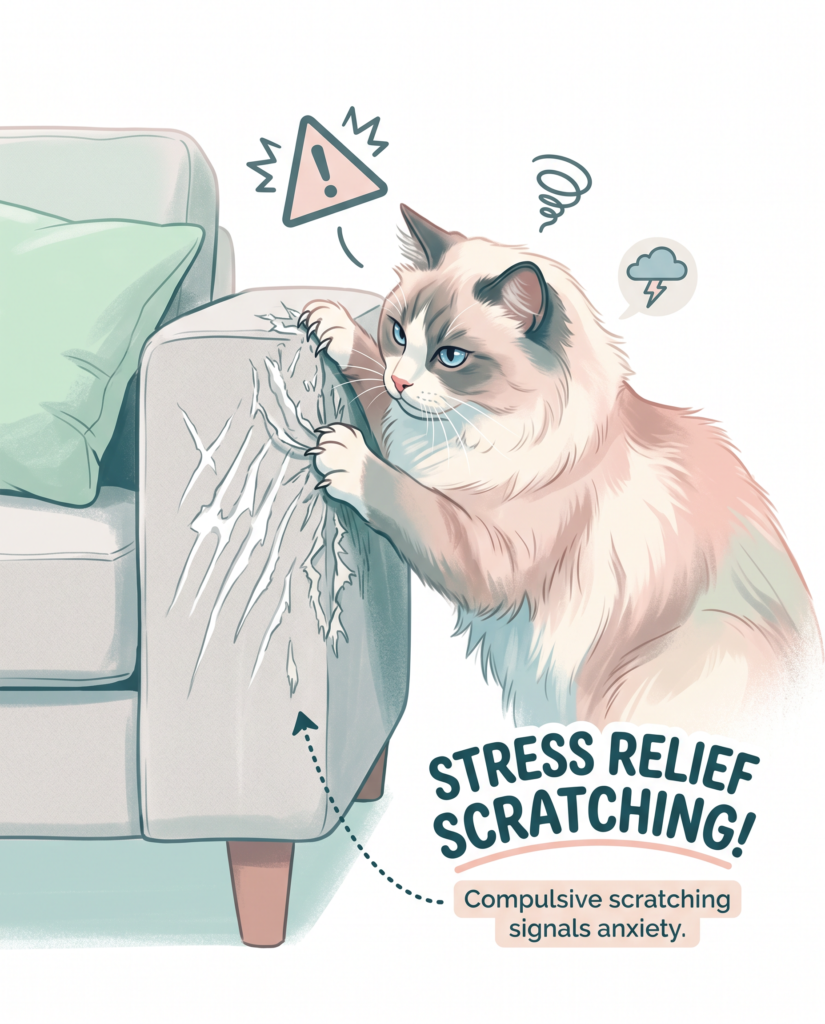
7. Excessive Scratching
All cats scratch it is a completely normal behavior that serves important physical and psychological functions. But scratching that increases dramatically in frequency or intensity, or that targets new surfaces, can signal elevated stress levels. Scratching releases tension and deposits scent, both of which provide comfort to an anxious cat. A stressed cat may scratch compulsively as a self-soothing mechanism. If your cat is suddenly destroying furniture or surfaces they previously ignored, consider what has changed in their environment recently. Providing additional appropriate scratching surfaces and addressing the underlying stressor will be far more effective than any deterrent spray.
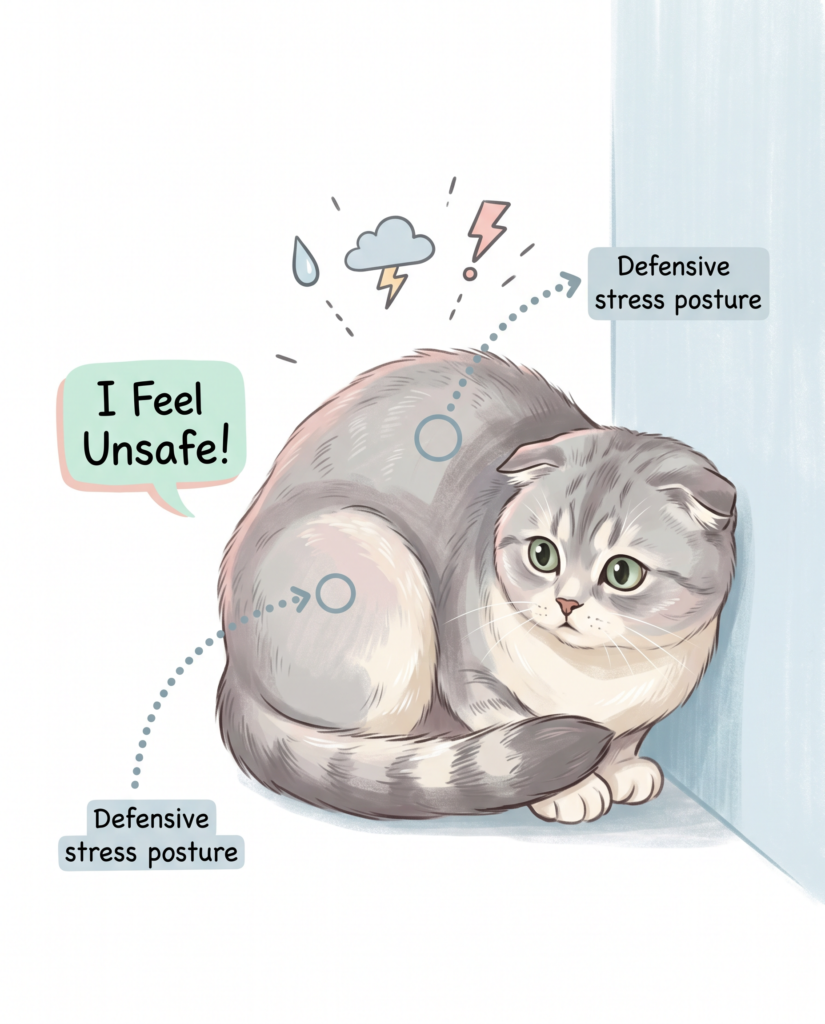
8. Crouching and Appearing Smaller
A stressed cat will often try to make themselves physically smaller crouching low to the ground, tucking their paws under their body, pulling their tail close, and flattening their ears. This is a defensive posture that signals the cat feels threatened or overwhelmed by their environment. You may also notice your cat moving more slowly and carefully than usual, hugging walls as they move through the house, or freezing completely when approached. These are all signs of a cat operating in a state of chronic low-level anxiety. A cat who consistently moves through their own home as if they are trying not to be noticed is a cat who does not feel safe.
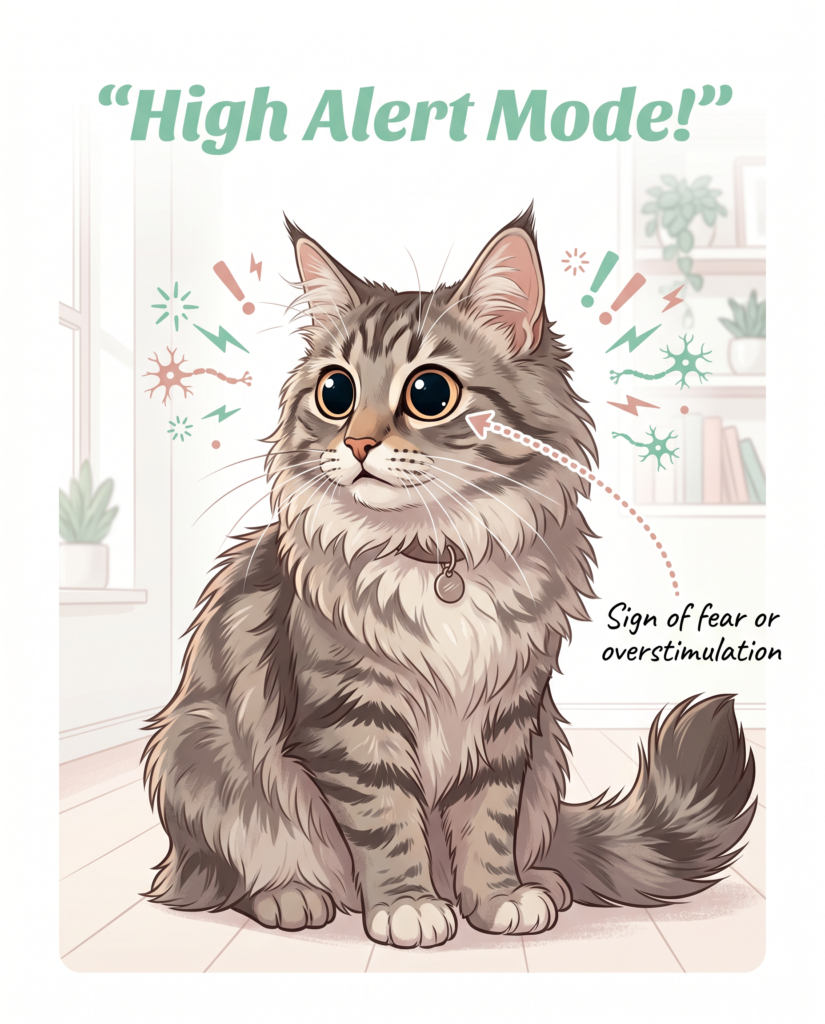
9. Dilated Pupils
The eyes are one of the most reliable indicators of a cat’s emotional state. Pupils that are frequently dilated large and round rather than the normal narrow slit in bright light indicate that your cat’s nervous system is in a heightened state of alertness or anxiety. While dilated pupils are normal in low light conditions, persistently dilated pupils in normal lighting are a sign of stress, fear, or overstimulation. A cat with wide, dilated eyes is essentially in a state of fight or flight readiness. If you notice your cat frequently has dilated pupils even in well-lit, familiar environments, pay close attention to what situations trigger this response.
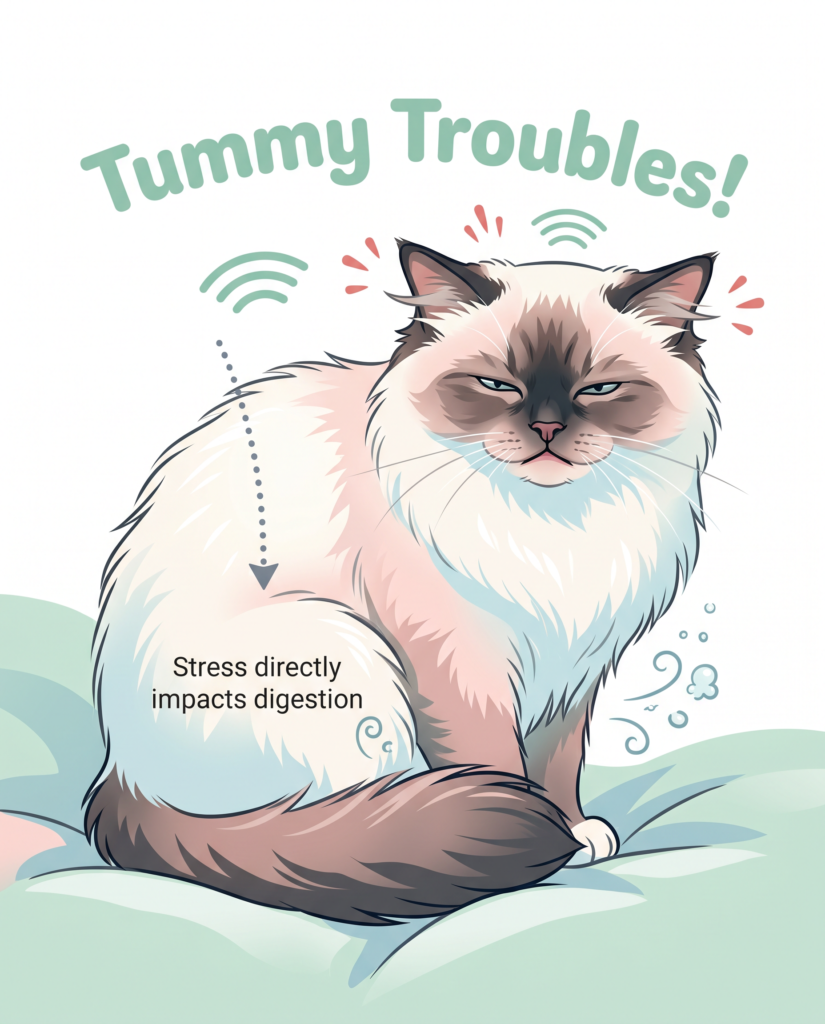
10. Diarrhea or Vomiting
The gut-brain connection is just as real in cats as it is in humans. Chronic stress has a direct and measurable impact on digestive function, and many stressed cats experience recurrent vomiting, diarrhea, or loose stools that have no identifiable medical cause. This is particularly common during major life changes like moving house, the introduction of a new pet, or a change in the owner’s schedule. Always have persistent digestive symptoms evaluated by a vet first to rule out illness or dietary causes. But if your cat gets a clean bill of health and the digestive issues coincide with stressful events or changes, stress management strategies are the logical next step.
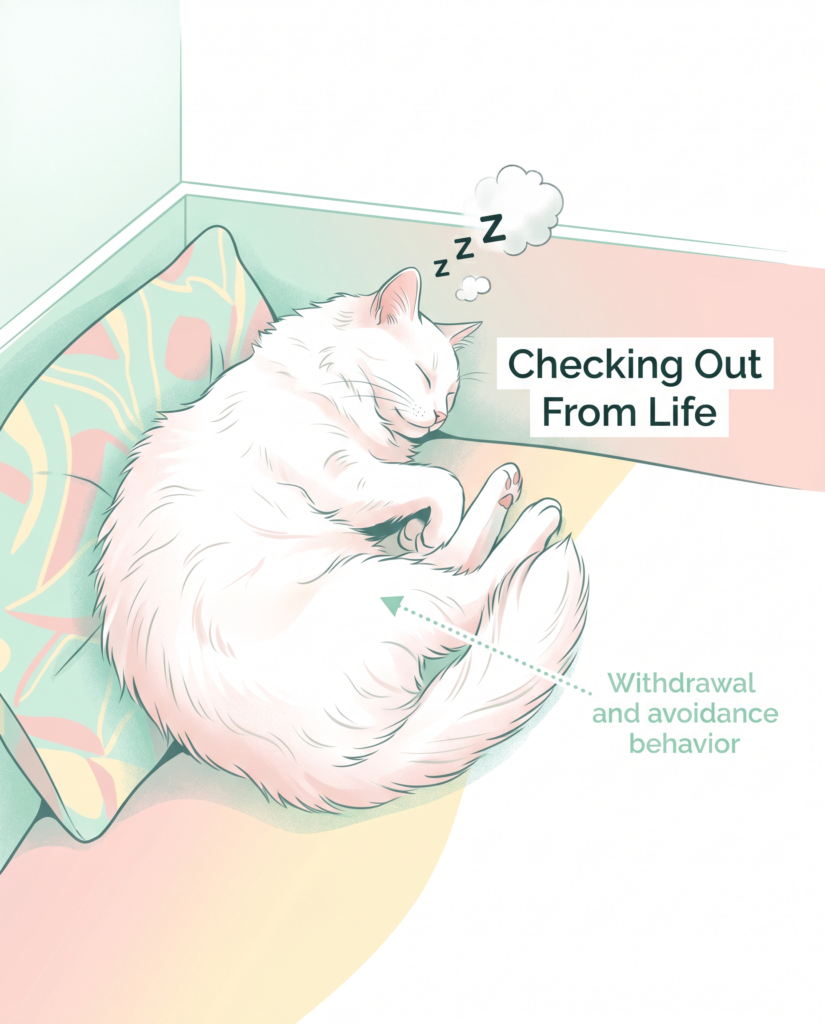
11. Sleeping Much More Than Usual
While cats naturally sleep a lot between 12 and 16 hours a day a cat who is suddenly sleeping significantly more than their normal baseline may be withdrawing from a stressful environment rather than simply resting. Excessive sleep in a stressed cat is often a form of avoidance a way of checking out from an environment that feels threatening or overwhelming. This is different from the relaxed, comfortable sleep of a content cat. A stressed cat sleeping excessively will often appear tense even while sleeping curled tightly rather than stretched out, and easily startled. Monitor changes in your cat’s sleep patterns alongside their other behaviors for a fuller picture of their emotional state.
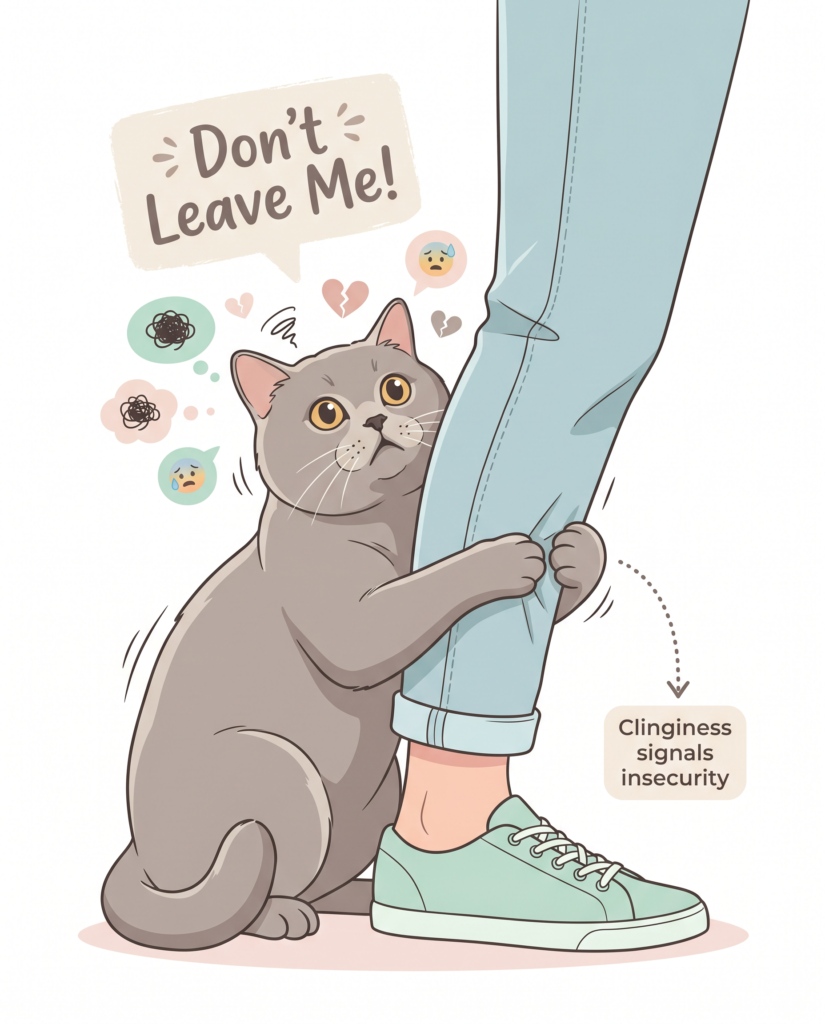
12. Increased Clinginess or Neediness
While some cats become withdrawn when stressed, others respond in the opposite direction becoming excessively clingy, needy, and demanding of constant attention and reassurance. A cat who follows you everywhere, cries when you leave the room, or insists on constant physical contact may be using your presence as an anchor in an environment that feels unpredictable or threatening. This separation anxiety style of stress response is particularly common in cats who are very bonded to one specific person. While it can feel flattering, excessive clinginess is a sign of insecurity rather than pure affection. Providing your cat with enrichment, predictable routines, and safe spaces can help build the confidence they need to feel secure even when you are not present.
If your cat is showing multiple signs of stress consistently, consult your veterinarian. Chronic stress has serious long-term health consequences for cats and is always worth addressing promptly and compassionately.