
10 Human Foods That Are Actually Safe for Cats
Most cat owners know what their cat can’t eat but what about the foods you can actually share? The truth is, several common human foods are not only safe for cats but can even offer nutritional benefits when served correctly. From cooked chicken to blueberries, salmon to pumpkin, here are 10 human foods your cat can enjoy and exactly how to serve them safely.
1. Cooked Chicken
Cooked chicken is one of the safest and most nutritious human foods you can share with your cat. It is an excellent source of lean protein, which is the foundation of a healthy feline diet. Cats are obligate carnivores, meaning their bodies are designed to run primarily on animal protein. Plain boiled or baked chicken with no seasoning, garlic, onion, or sauces is perfectly safe and highly digestible for cats. Many vets actually recommend plain chicken as a bland meal for cats recovering from digestive upset. You can shred it into small pieces and serve it as a treat or mix it into their regular food for added protein. Always make sure the chicken is fully cooked raw chicken carries the risk of salmonella and other harmful bacteria. Remove all bones before serving as cooked bones can splinter and cause serious internal injuries.
2. Cooked Salmon
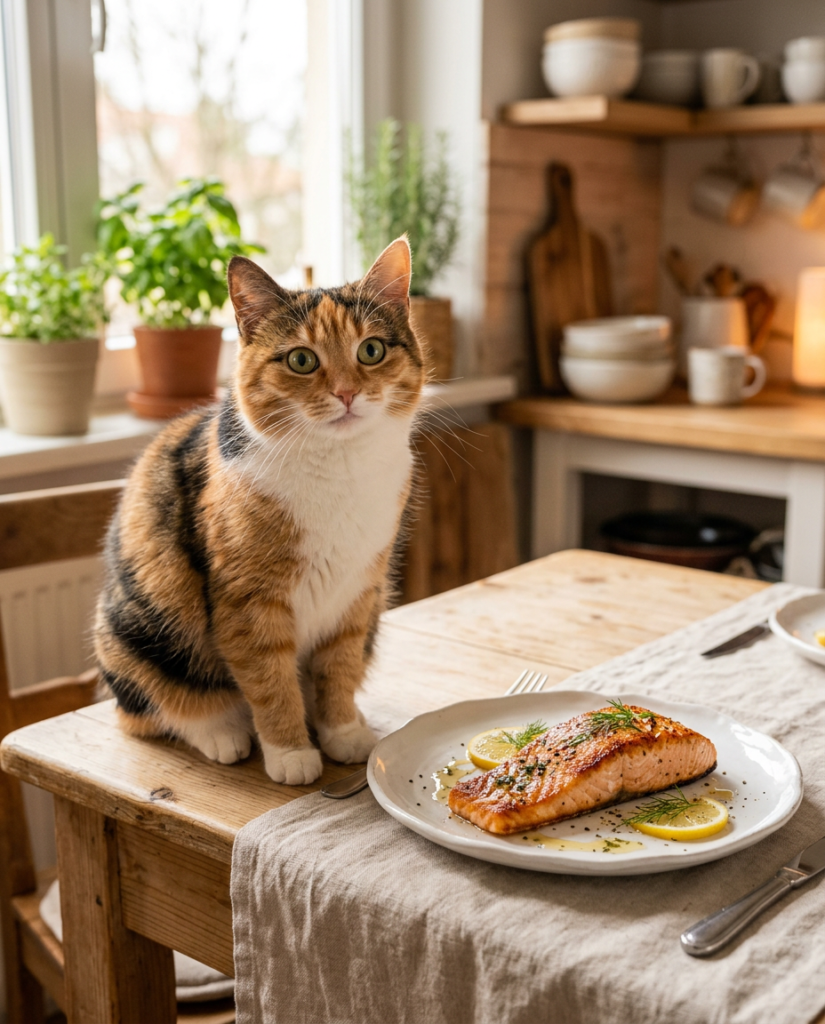
Salmon is a favorite among cats and for good reason it is packed with high quality protein and omega-3 fatty acids that support a healthy coat, skin, and joints. Plain cooked salmon with no added salt, seasoning, or sauces is perfectly safe for cats in moderate amounts. The omega-3s in salmon can help reduce inflammation, improve coat shine, and support brain health. However, salmon should always be fully cooked before giving it to your cat. Raw salmon can contain parasites and harmful bacteria that can make your cat seriously ill. Canned salmon is also an option but choose varieties packed in water with no added salt. Serve salmon as an occasional treat rather than a daily staple too much fish can lead to nutritional imbalances over time.
3. Cooked Eggs
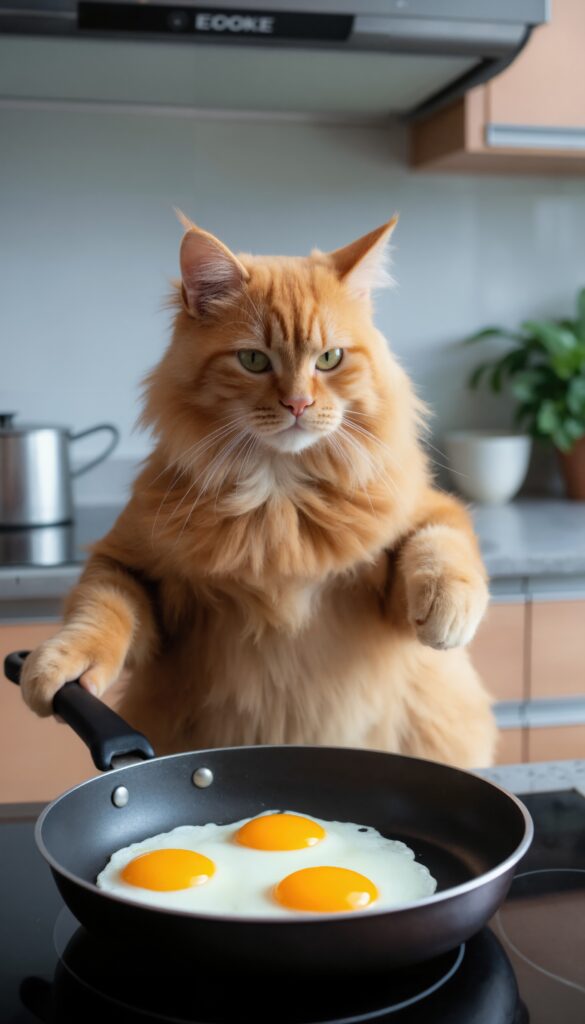
Eggs are a wonderful source of protein and essential amino acids that cats need to thrive. Plain scrambled or boiled eggs with no butter, oil, salt, or seasoning are completely safe for cats. Eggs also contain taurine, an essential amino acid that cats cannot produce on their own and must obtain through their diet. A deficiency in taurine can lead to serious heart and eye problems in cats. Never feed raw eggs to your cat raw egg whites contain avidin, a protein that blocks the absorption of biotin (vitamin B7) and can cause deficiency over time. Raw eggs also carry the risk of salmonella. A small piece of plain cooked egg as an occasional treat is a great way to give your cat a protein boost they will absolutely love.
4. Cooked Turkey
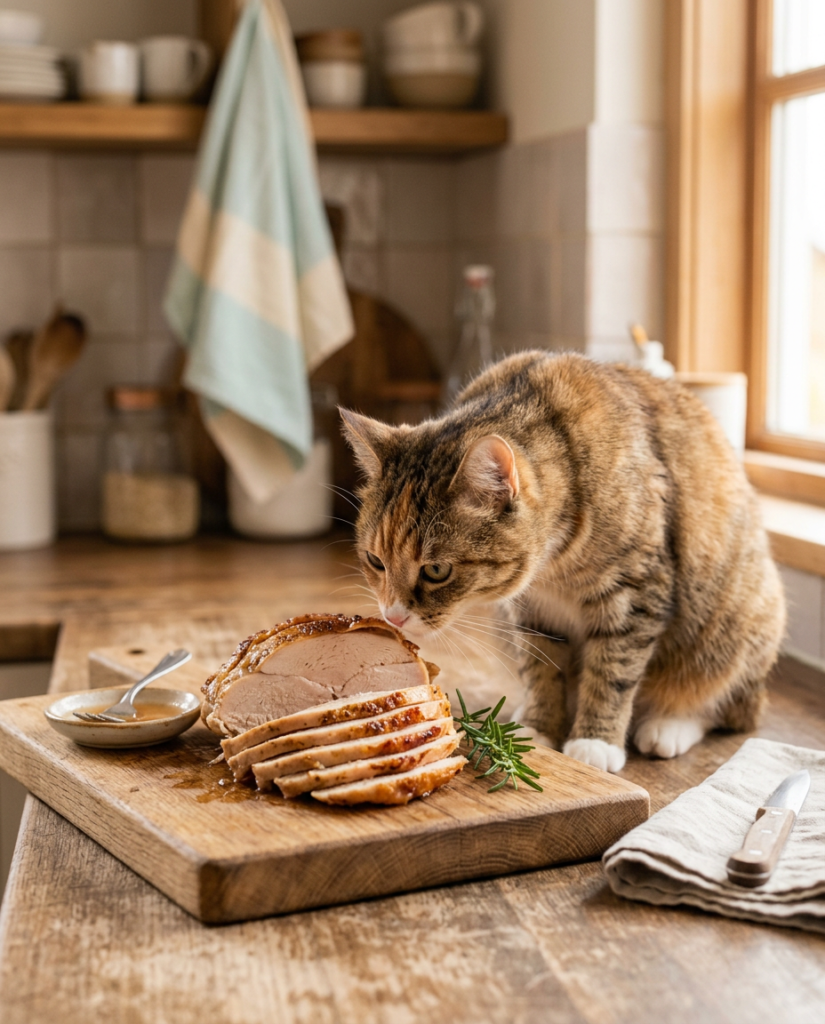
Plain cooked turkey is another excellent lean protein source that is completely safe for cats. It is easy to digest and contains essential amino acids that support muscle health and overall wellbeing. Many commercial cat foods actually use turkey as a primary ingredient because of its high nutritional value. You can offer your cat small pieces of plain roasted or boiled turkey as a treat. Always remove the skin as it is high in fat and can cause digestive upset. Never give your cat turkey that has been seasoned with garlic, onion, herbs, or any other spices. Avoid processed turkey products like deli meats which are loaded with salt and preservatives that are harmful to cats.
5. Blueberries
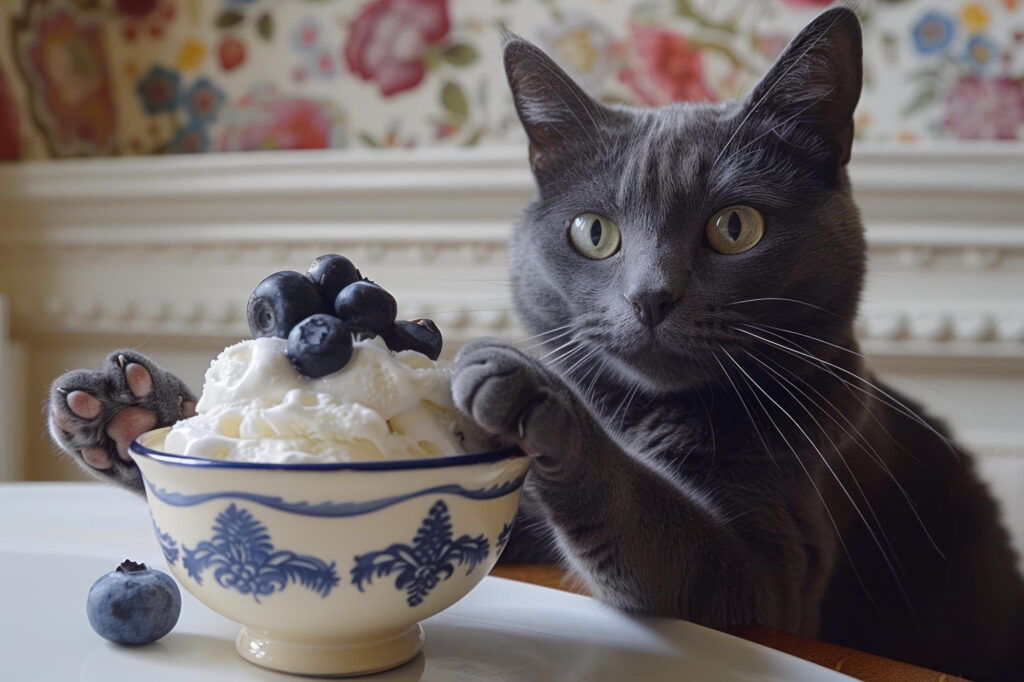
Blueberries are one of the few fruits that are completely safe for cats and actually offer some nutritional benefits. They are rich in antioxidants, vitamin C, and fiber. While cats cannot taste sweetness the way humans do and may show little interest in fruit, some cats do enjoy the texture of blueberries. The antioxidants in blueberries can help support your cat’s immune system and protect cells from oxidative damage. Offer blueberries as an occasional treat one or two berries at a time is plenty. Always wash them thoroughly and cut them in half to prevent any choking risk. Don’t overdo it as too much fruit can cause digestive upset due to the natural sugar content.
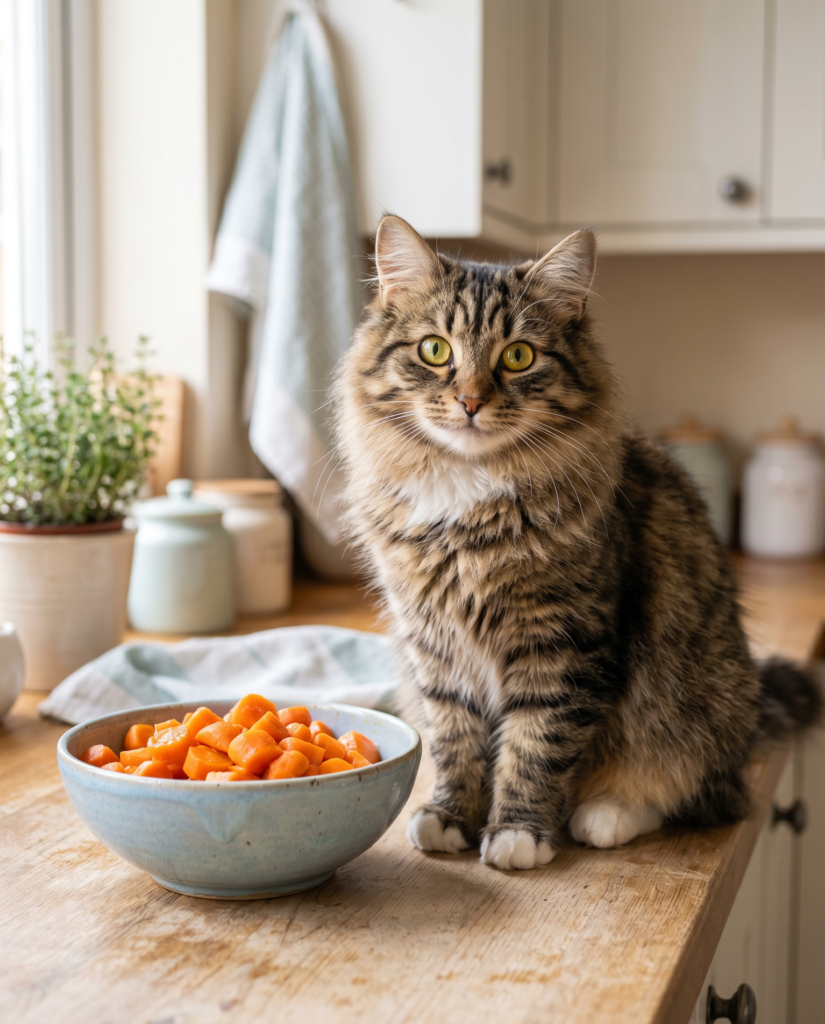
6. Cooked Carrots
Cooked carrots are a safe and healthy treat for cats when served plain and in small amounts. They are a good source of beta-carotene, fiber, and vitamins. Cooking carrots makes them soft and easy for cats to chew and digest. Raw carrots are technically not toxic but they are very hard and pose a choking risk always cook them first. Keep portions small as cats don’t need vegetables in their diet the way humans do. Carrots should be seen as an occasional treat, not a dietary staple. Some cats will completely ignore carrots while others find them interesting every cat has different taste preferences. Never add butter, salt, or seasoning when preparing carrots for your cat.
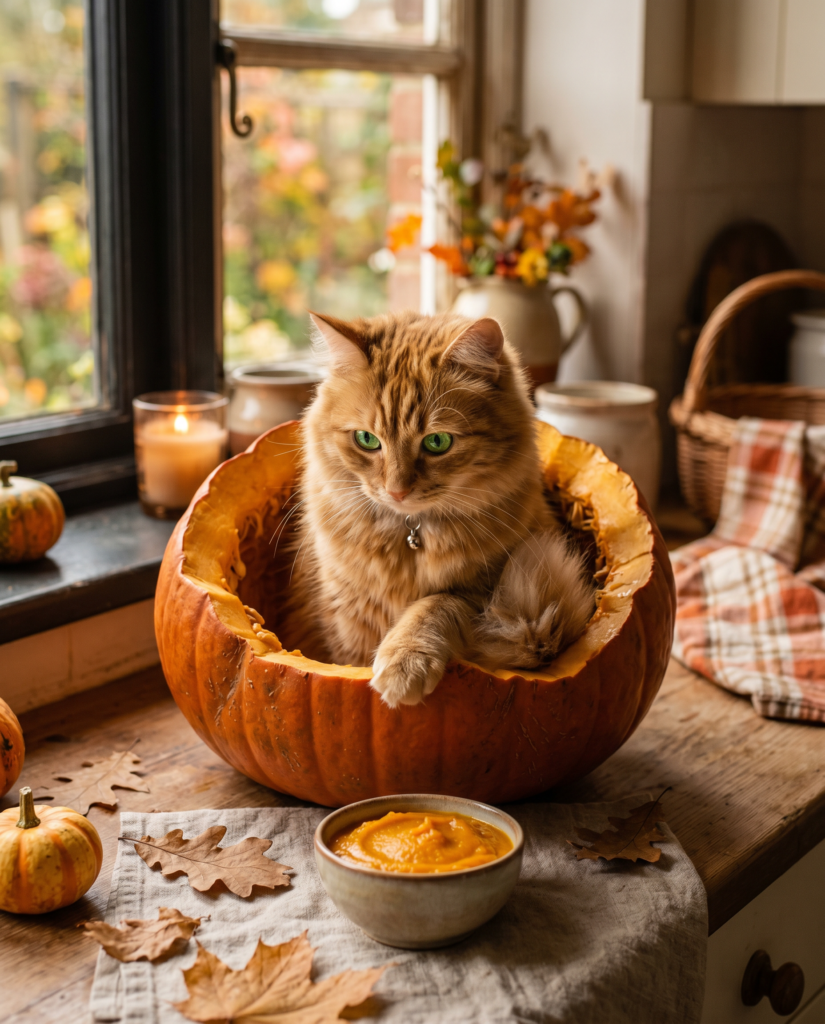
7. Cooked Pumpkin
Plain cooked pumpkin is one of the most cat-friendly human foods out there and is even recommended by vets. It is high in fiber and water content, making it excellent for supporting digestive health. A small spoonful of plain pumpkin added to your cat’s food can help with both constipation and mild diarrhea by regulating digestion naturally. Make sure you are using plain cooked pumpkin not pumpkin pie filling which contains sugar, spices, and other additives that are harmful to cats. You can use canned plain pumpkin for convenience. Start with a very small amount about half a teaspoon and increase gradually if your cat tolerates it well. Many cats actually enjoy the taste of pumpkin.
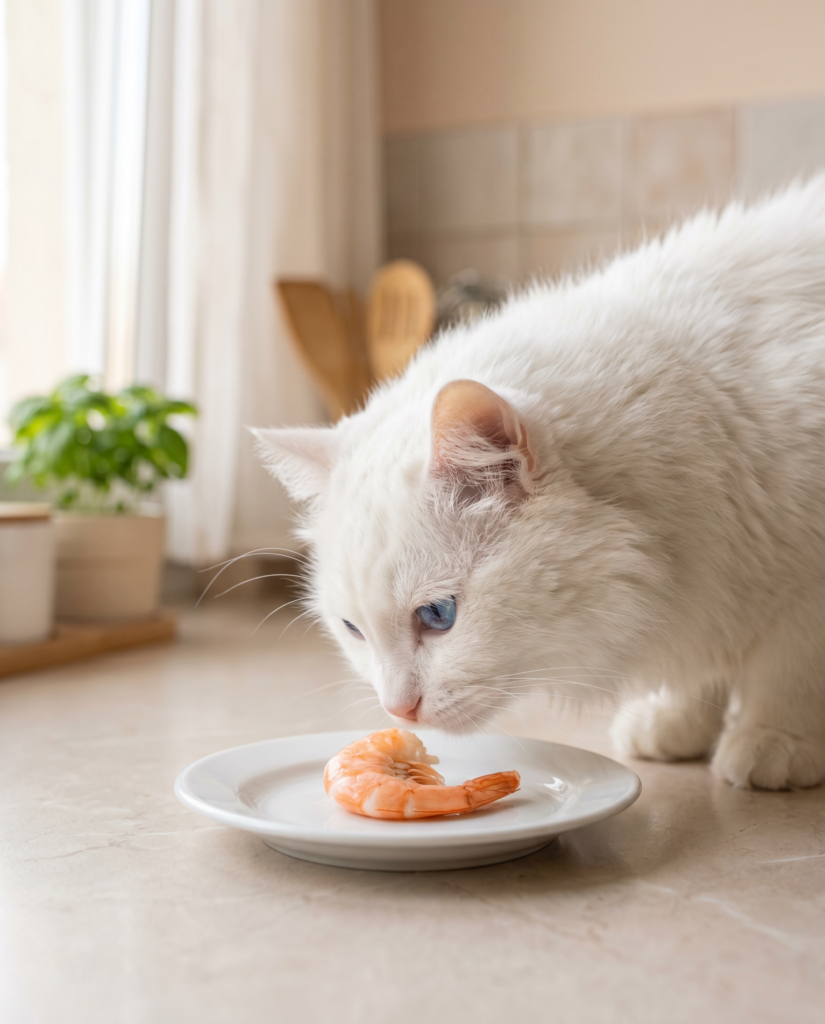
8. Cooked Shrimp
Plain cooked shrimp is a safe and protein-rich treat that many cats absolutely love. Shrimp is low in calories and high in protein, making it a guilt-free occasional treat. Make sure the shrimp is fully cooked, peeled, and deveined before serving. Never give your cat raw shrimp as it can carry harmful bacteria. Avoid shrimp that has been seasoned, battered, or cooked in butter, oil, or garlic plain boiled or steamed shrimp only. Because shrimp is high in sodium and cholesterol, it should be served as a treat rather than a regular part of your cat’s diet. One or two small shrimp pieces at a time is more than enough.
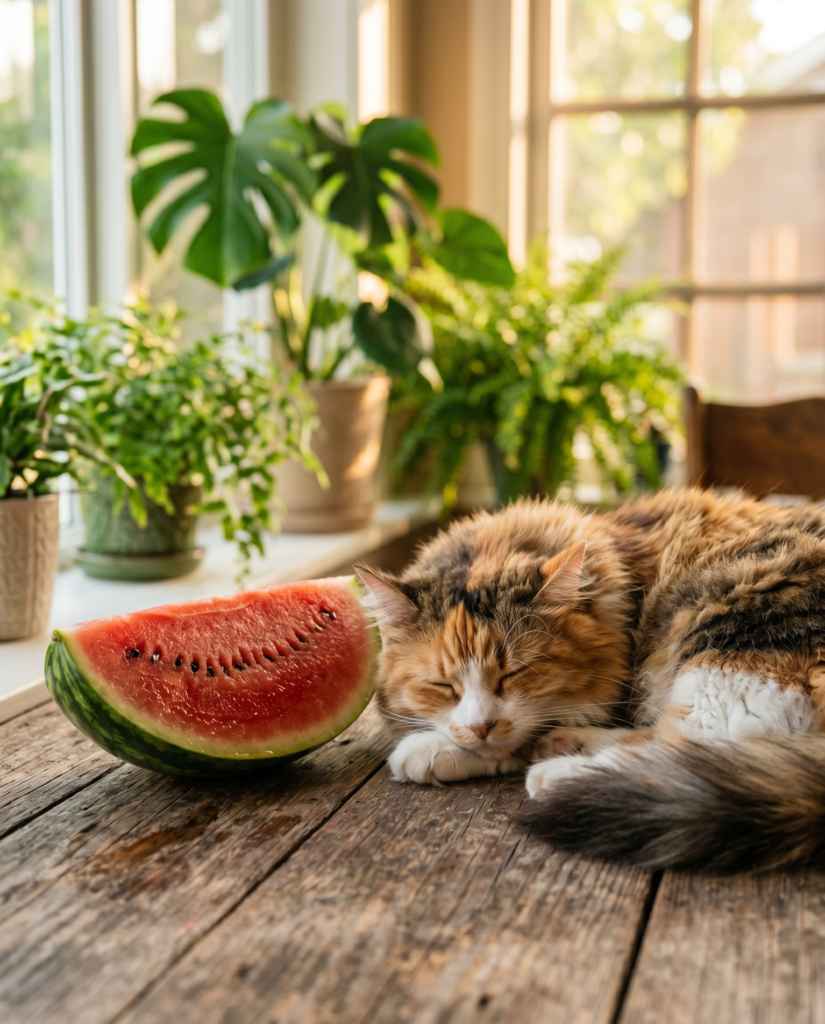
9. Watermelon (Seedless)
Seedless watermelon is safe for cats in very small amounts. It is made up of about 92% water, making it a hydrating treat on a hot day. However, cats cannot taste sweetness so they may have little interest in watermelon. If your cat does enjoy it, offer a very small cube with all seeds and rind removed. The seeds can cause intestinal blockage and the rind is difficult to digest. The high water content can actually be beneficial for cats who don’t drink enough water. Keep portions tiny watermelon is high in natural sugar which cats don’t process efficiently. Think of it as an occasional summer treat rather than a dietary addition.
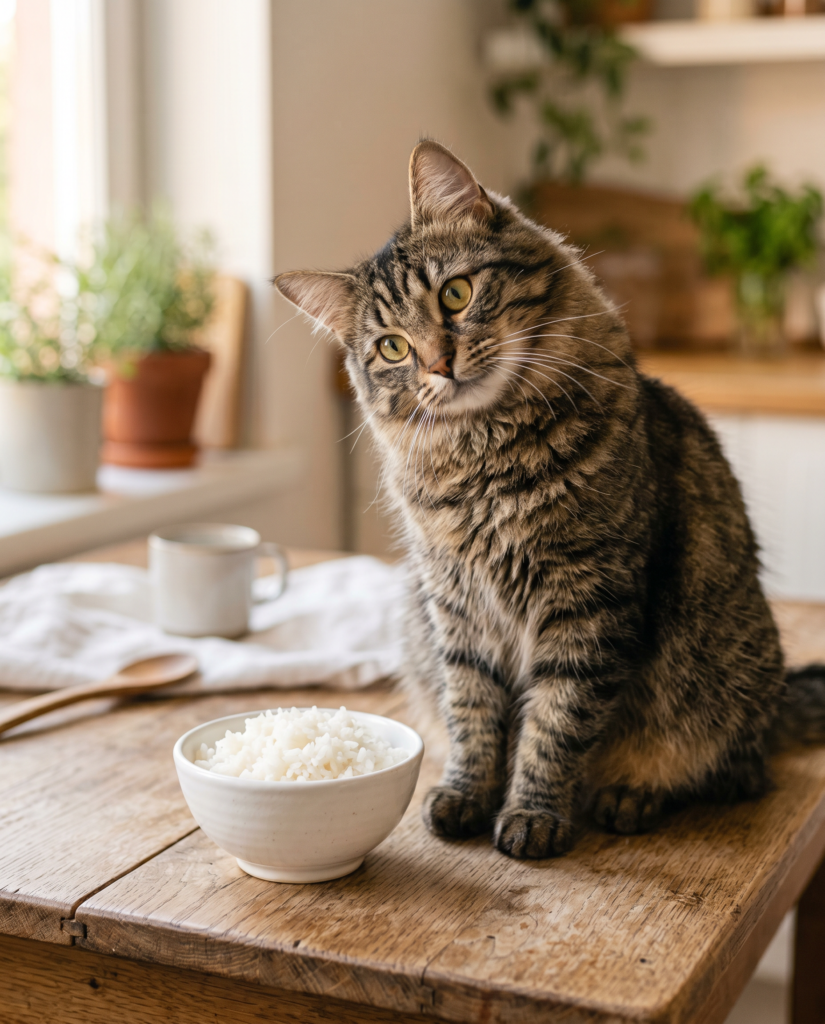
10. Plain Cooked Rice
Plain cooked white rice is not toxic to cats and is often used as a bland food for cats with upset stomachs. It is easy to digest and can help firm up loose stools during digestive upset. However, rice offers very little nutritional value for cats since they are obligate carnivores who don’t need carbohydrates. Never season rice with salt, butter, or any other additives before giving it to your cat. Offer it only in very small amounts mixed with a protein source like cooked chicken. Rice should never replace your cat’s regular cat food it is simply a useful temporary addition during digestive recovery or as an occasional mixer.
Always introduce new foods gradually and in small amounts. Every cat is different — what one cat tolerates well another may not. When in doubt, consult your veterinarian before adding new foods to your cat’s diet.