
7 Feeding Mistakes Cat Owners Make
Even the most devoted cat owners make feeding mistakes often without realizing it. From free feeding to ignoring life stage requirements, these common errors can silently impact your cat’s health over months and years. The good news is that once you know what to look for, every single one of these mistakes is easy to fix. Here are 7 of the most common cat feeding mistakes and exactly what to do instead.
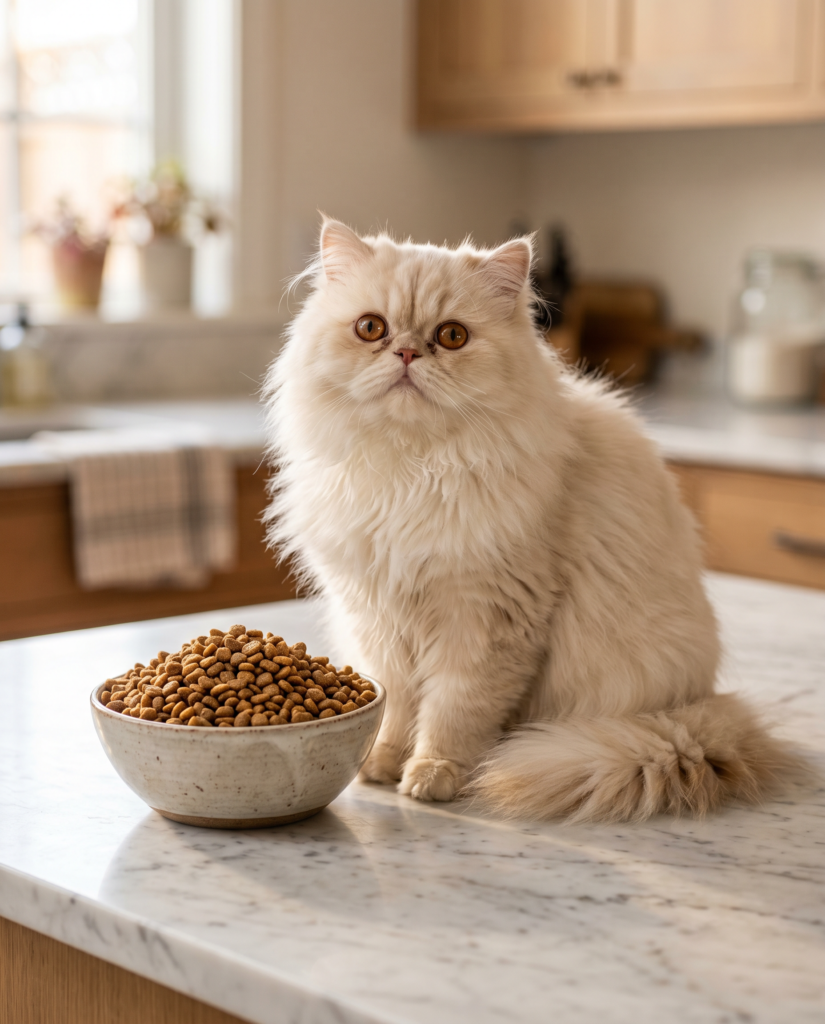
1. Feeding Too Much Dry Food
Dry kibble is convenient and affordable, but relying on it exclusively can seriously impact your cat’s health. Cats have a naturally low thirst drive and were designed to get most of their moisture from food. Dry food contains only about 10% moisture compared to wet food’s 70-80%. Cats eating exclusively dry food are almost always chronically dehydrated, which puts enormous strain on the kidneys over time. This is one of the leading causes of kidney disease in domestic cats. Gradually introducing wet food alongside dry kibble makes a significant difference in your cat’s long-term health. Even replacing just one dry food meal per day with wet food dramatically increases overall moisture intake.
2. Free Feeding All Day
Leaving a bowl of food out for your cat to graze on throughout the day might seem kind, but it is one of the most common causes of feline obesity. Cats in the wild eat multiple small meals a day after hunting they are not designed to have unlimited access to food. Free feeding makes it nearly impossible to monitor how much your cat is actually eating, and many cats will overeat simply out of boredom. Scheduled meal times of two to three meals per day give you control over portions and help maintain a healthy weight. Meal feeding also makes it much easier to notice early if your cat’s appetite changes, which can be an important indicator of illness.
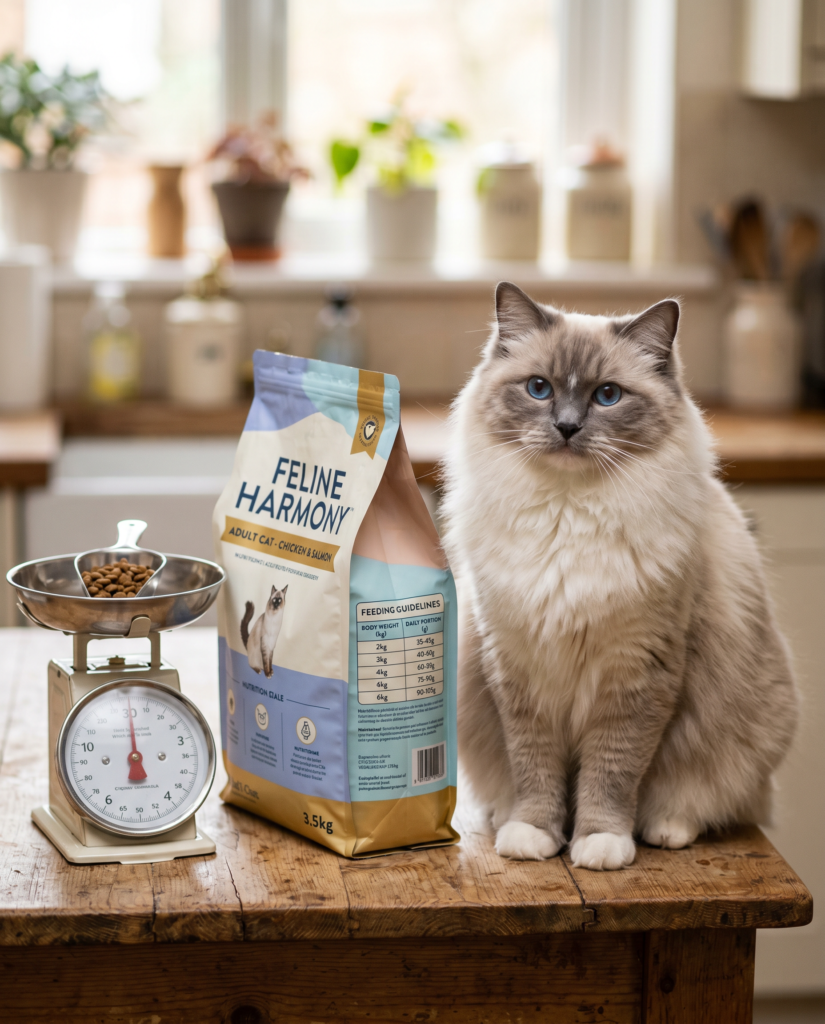
3. Ignoring the Feeding Guidelines on Cat Food Packaging
Most cat owners eyeball portion sizes without ever checking the recommended feeding amounts on the packaging. This almost always results in overfeeding. Cat food packaging guidelines are calculated based on your cat’s weight and provide a useful starting point for portion control. Keep in mind that these are guidelines your cat’s individual needs may vary based on age, activity level, and health status. An indoor cat who sleeps most of the day needs fewer calories than an active outdoor cat. Weigh your cat regularly and adjust portions accordingly. If your cat is gaining weight despite following guidelines, reduce portions slightly and consult your vet.
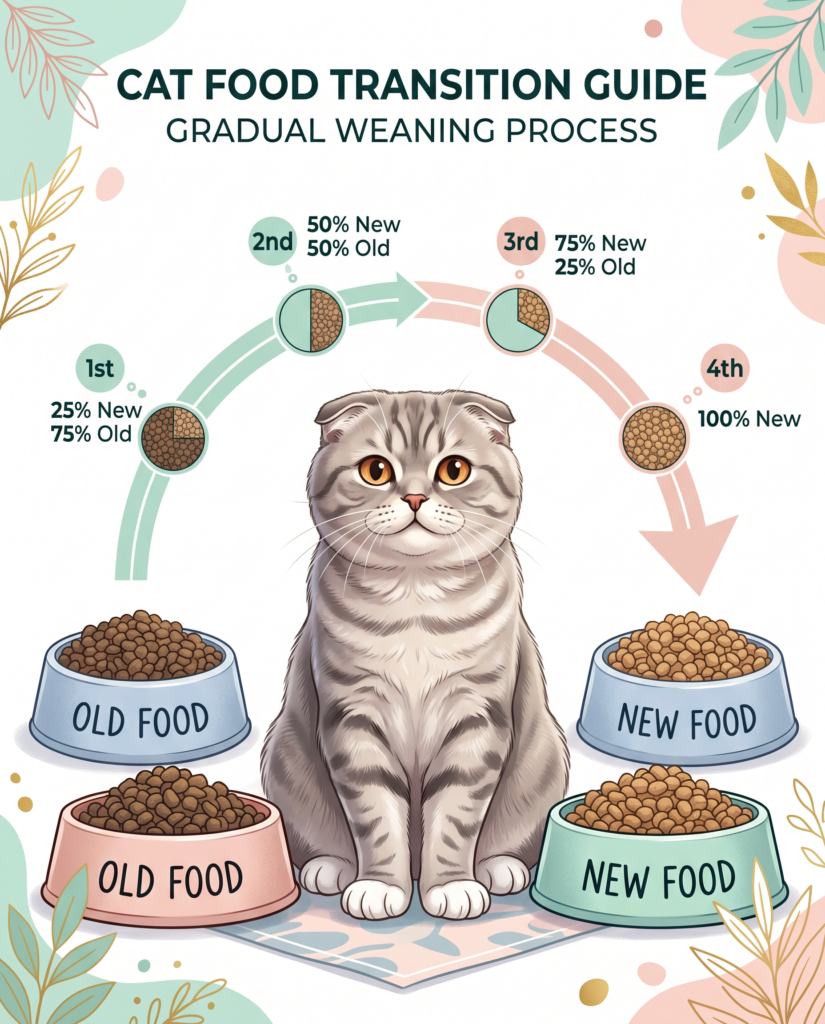
4. Switching Foods Too Suddenly
Changing your cat’s food abruptly is a recipe for digestive upset. Cats have sensitive digestive systems and sudden dietary changes frequently cause vomiting, diarrhea, and food refusal. Whenever you introduce a new food, transition gradually over 7-10 days. Start by mixing about 25% new food with 75% old food for the first few days, then gradually increase the proportion of new food. This gives your cat’s digestive system time to adjust to the new ingredients. If your cat shows signs of digestive upset even during a gradual transition, slow down the process further. Some cats need up to two weeks to fully transition to a new food without issues.
5. Feeding Human Food as Regular Meals
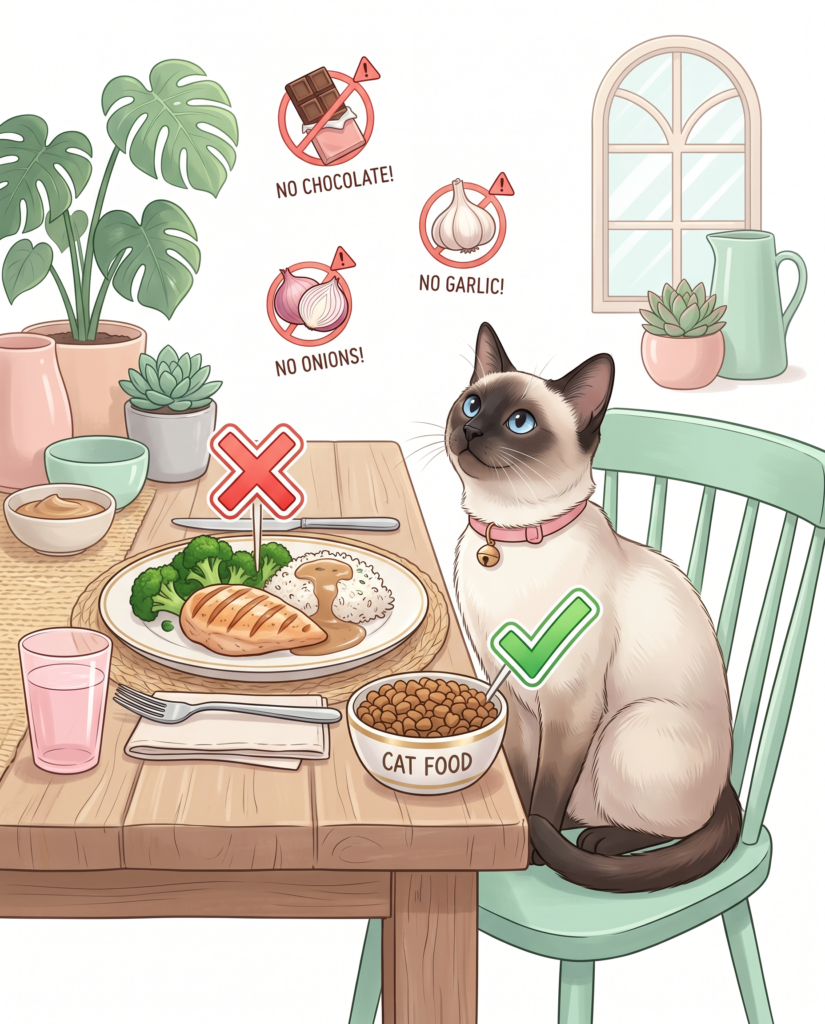
While some human foods are safe for cats in small amounts, using them as regular meal replacements is a serious mistake. Human food is not formulated to meet a cat’s complex nutritional needs. Cats require specific nutrients like taurine, arachidonic acid, and vitamin A in forms that only come from animal sources. A diet based primarily on human food almost always leads to dangerous nutritional deficiencies over time. Even plain cooked chicken, which is perfectly safe as a treat, lacks the complete nutritional profile cats need as a staple diet. Commercial cat foods especially high quality ones are carefully formulated to provide complete and balanced nutrition. Use human food only as an occasional treat, never as a meal replacement.
6. Not Considering Your Cat’s Life Stage
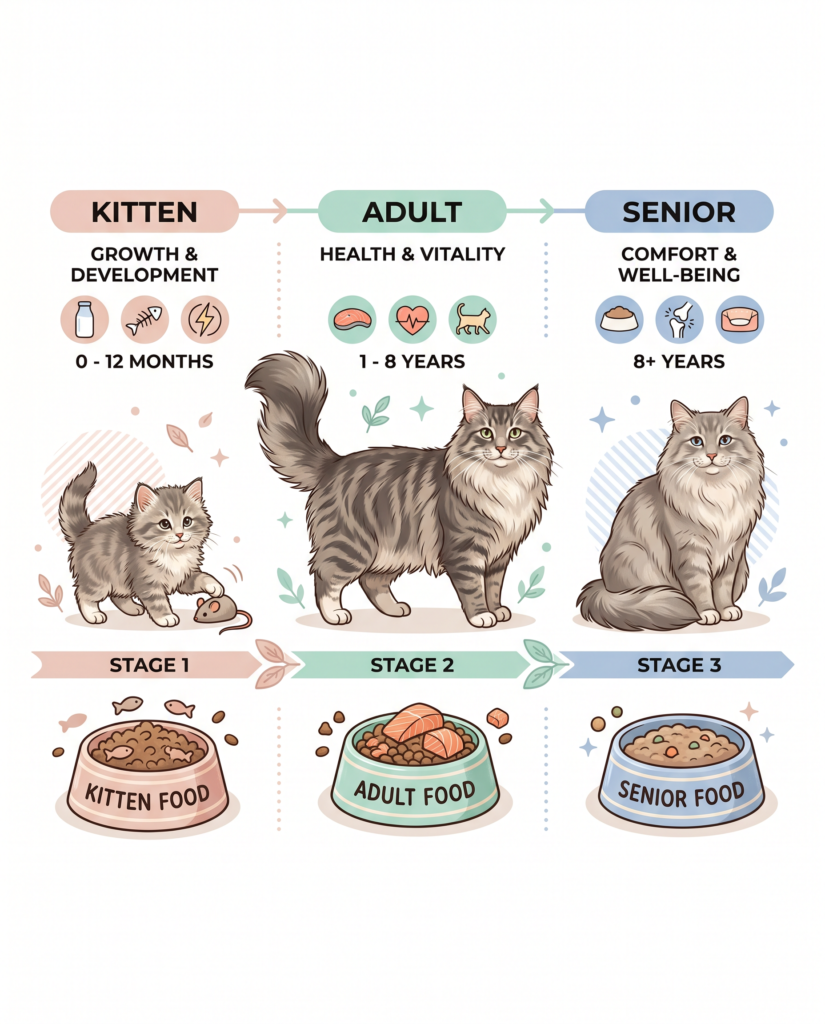
Feeding an adult cat food to a kitten or vice versa is one of the most overlooked feeding mistakes. Kittens need significantly more calories, protein, and specific nutrients like DHA to support rapid growth and brain development. Senior cats on the other hand often need fewer calories but more joint-supporting nutrients. Pregnant and nursing cats have dramatically increased nutritional requirements that standard adult food cannot meet. Always choose a food that is specifically formulated for your cat’s current life stage. Look for an AAFCO statement on the packaging confirming the food is complete and balanced for that particular life stage. Reassess your cat’s food every time there is a significant life change.
7. Ignoring Food Allergies and Sensitivities
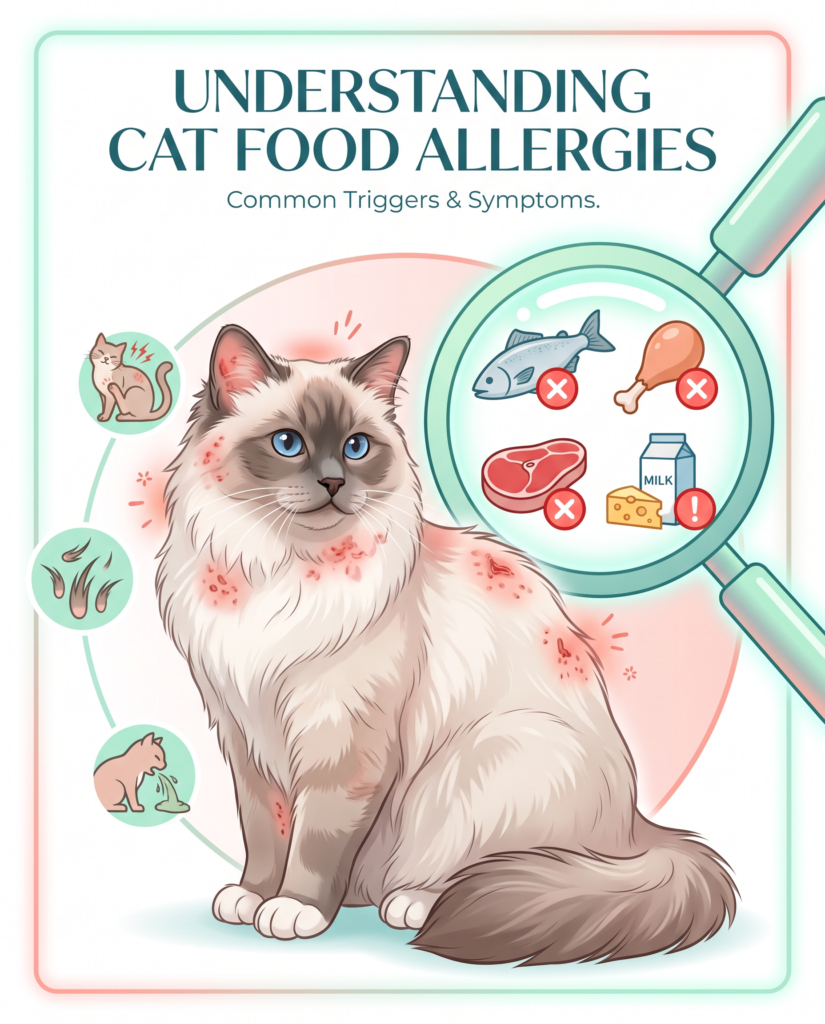
Many cat owners don’t realize their cat has a food allergy or sensitivity because the symptoms can be subtle and easy to attribute to other causes. Common signs of food allergies in cats include chronic vomiting, diarrhea, excessive scratching, hair loss, and skin irritation. The most common food allergens in cats are beef, fish, chicken, and dairy. If your cat shows any of these symptoms regularly, a food elimination trial under veterinary supervision can identify the trigger ingredient. Switching to a limited ingredient diet or a novel protein source like duck or rabbit often resolves symptoms completely. Never ignore persistent digestive or skin issues they are frequently diet related and very manageable once the cause is identified.
Being aware of these common mistakes is the first step to giving your cat the best possible nutrition. When in doubt, always consult your veterinarian for personalized feeding advice.