
7 Signs Your Cat Has Dental Problems
Did you know that the majority of cats over age three have some form of dental disease and most of their owners have absolutely no idea? Cats are experts at hiding pain and discomfort, which means dental problems can quietly progress for months before becoming obvious. Knowing what to look for can make all the difference between catching a problem early and facing a serious and expensive health crisis. Here are 7 warning signs your cat’s mouth needs attention.
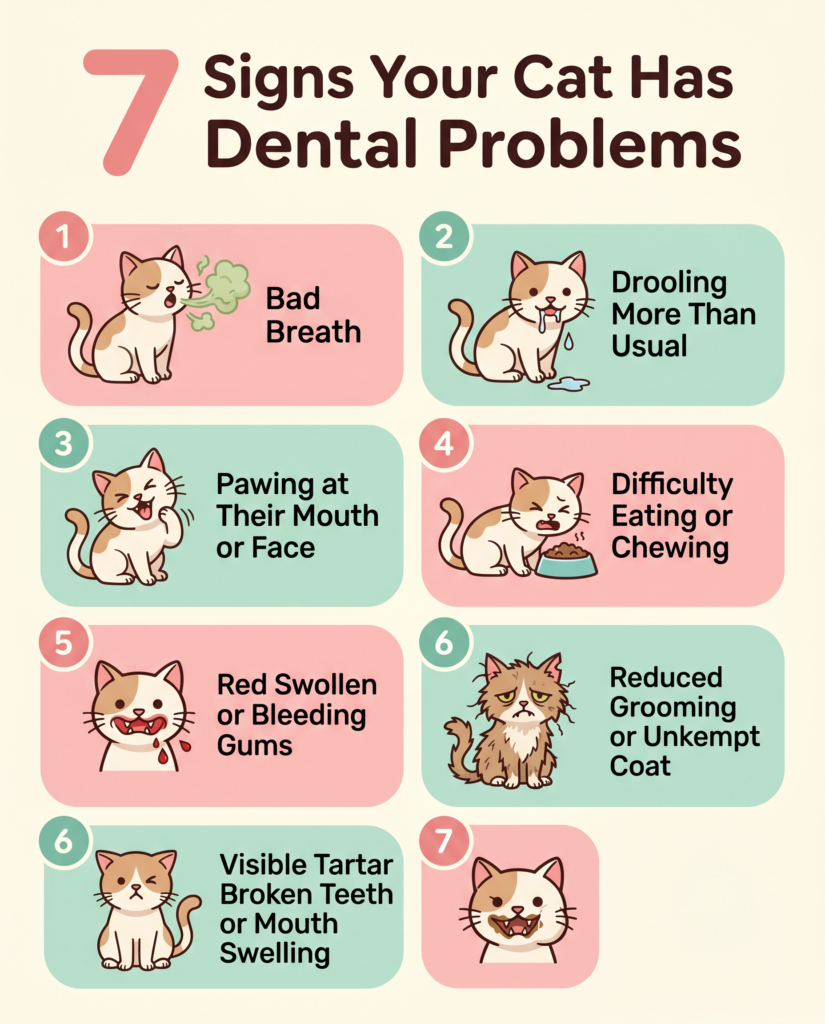
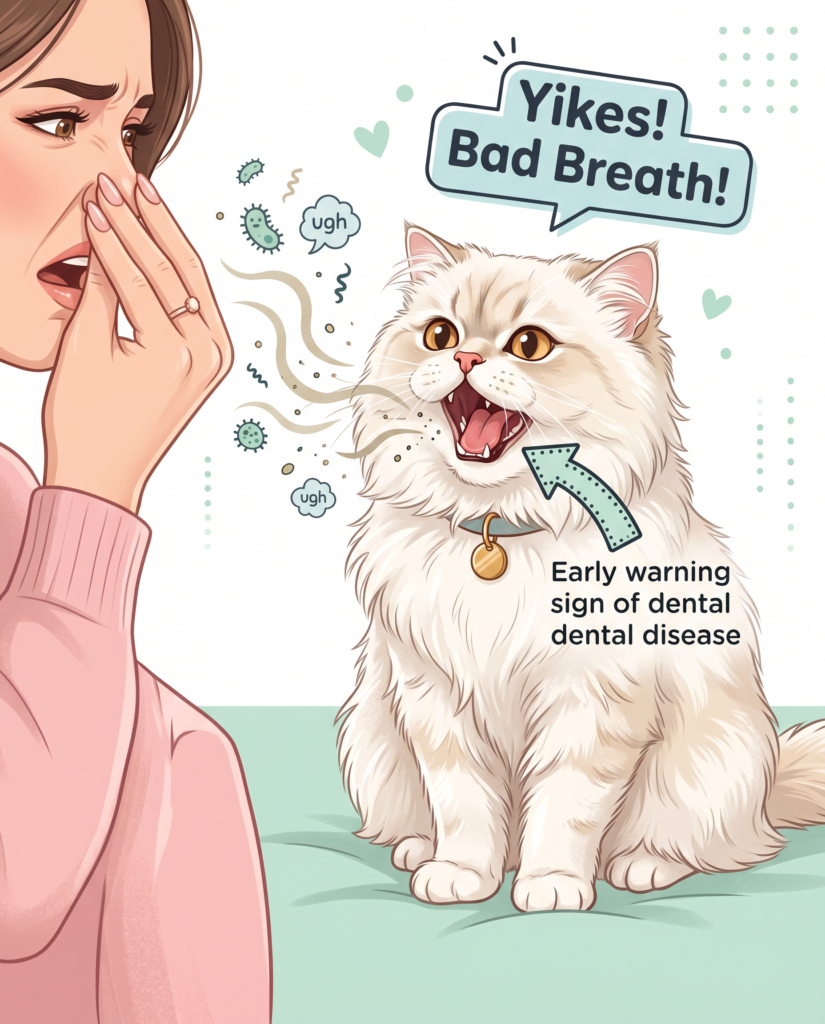
1. Bad Breath
A small amount of mild odor from your cat’s mouth is normal, but genuinely unpleasant or foul smelling breath is one of the earliest and most reliable warning signs of dental disease. Healthy cat breath should be relatively neutral not pleasant, but not offensive either. A strong, persistent bad smell coming from your cat’s mouth is almost always caused by bacteria buildup, gum disease, tooth decay, or infection. The smell is produced by bacteria breaking down food particles and tissue in the mouth. Many owners dismiss bad cat breath as simply “cat smell” and miss this important early warning sign. If your cat’s breath has suddenly become noticeably worse or smells particularly foul, a dental checkup with your vet is strongly recommended.
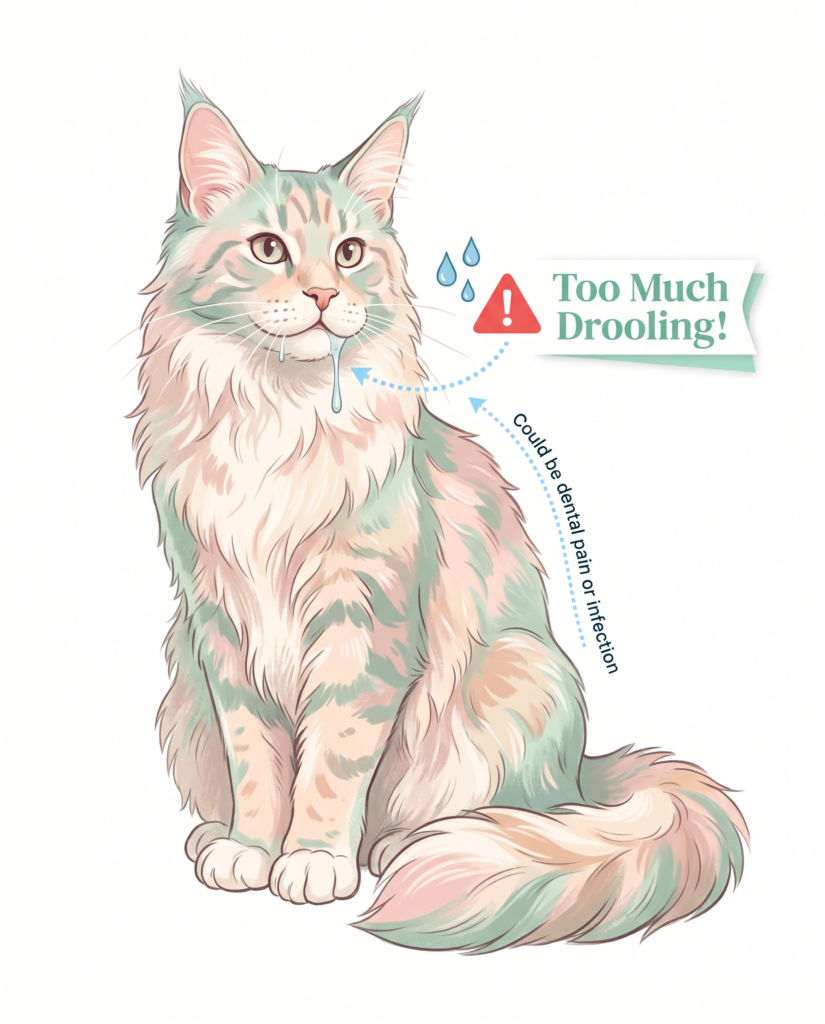
2. Drooling More Than Usual
While some cats drool slightly when they are extremely relaxed or purring intensely, excessive or unusual drooling is a significant red flag for dental problems. Painful teeth, infected gums, or mouth ulcers can all trigger abnormal drooling as your cat’s body responds to pain and inflammation in the mouth. You might notice wet patches where your cat sleeps, damp fur around their chin and neck, or visible drooling during eating. If the drool contains blood or has an unusual color or smell, the situation is more urgent and requires immediate veterinary attention. Never dismiss sudden changes in your cat’s drooling habits they are almost always telling you something important about their oral health.
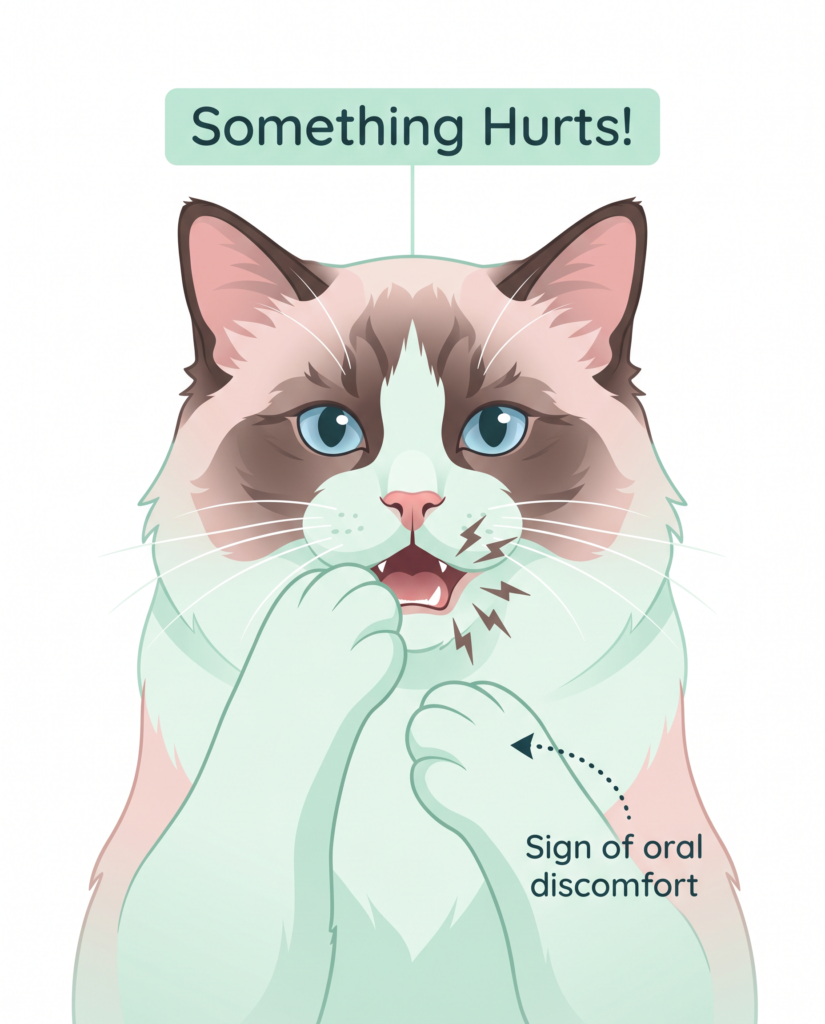
3. Pawing at Their Mouth or Face
A cat who frequently paws at their mouth, rubs their face against furniture or the floor, or shakes their head repeatedly is almost certainly experiencing oral discomfort. This behavior is your cat’s attempt to relieve pain or irritation they cannot otherwise address. Cats are instinctively very good at hiding pain and discomfort the fact that this behavior is visible means the discomfort is significant enough to override their natural tendency to mask weakness. Watch for this behavior particularly around meal times when chewing aggravates the pain. If you notice your cat pawing at their face more than occasionally, examine their mouth carefully for visible redness, swelling, or broken teeth, and contact your vet promptly.
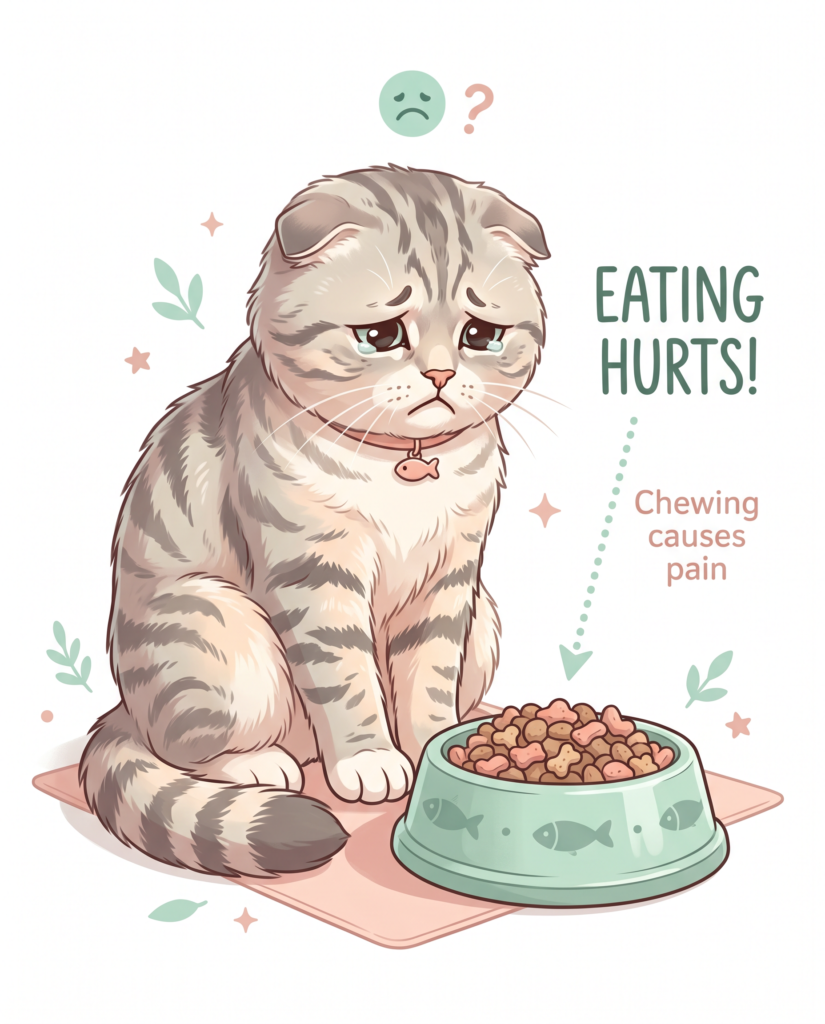
4. Difficulty Eating or Chewing
Changes in how your cat eats are one of the most telling signs of dental pain. A cat with a sore mouth may suddenly drop food while chewing, chew exclusively on one side of their mouth, eat much more slowly than usual, or show obvious hesitation and reluctance before eating. Some cats will approach their food bowl hungrily but then back away without eating because the act of chewing is too painful. Others may switch their preference from hard kibble to wet food because it requires less chewing. Any significant change in your cat’s eating behavior especially combined with other symptoms on this list warrants a veterinary examination as soon as possible.
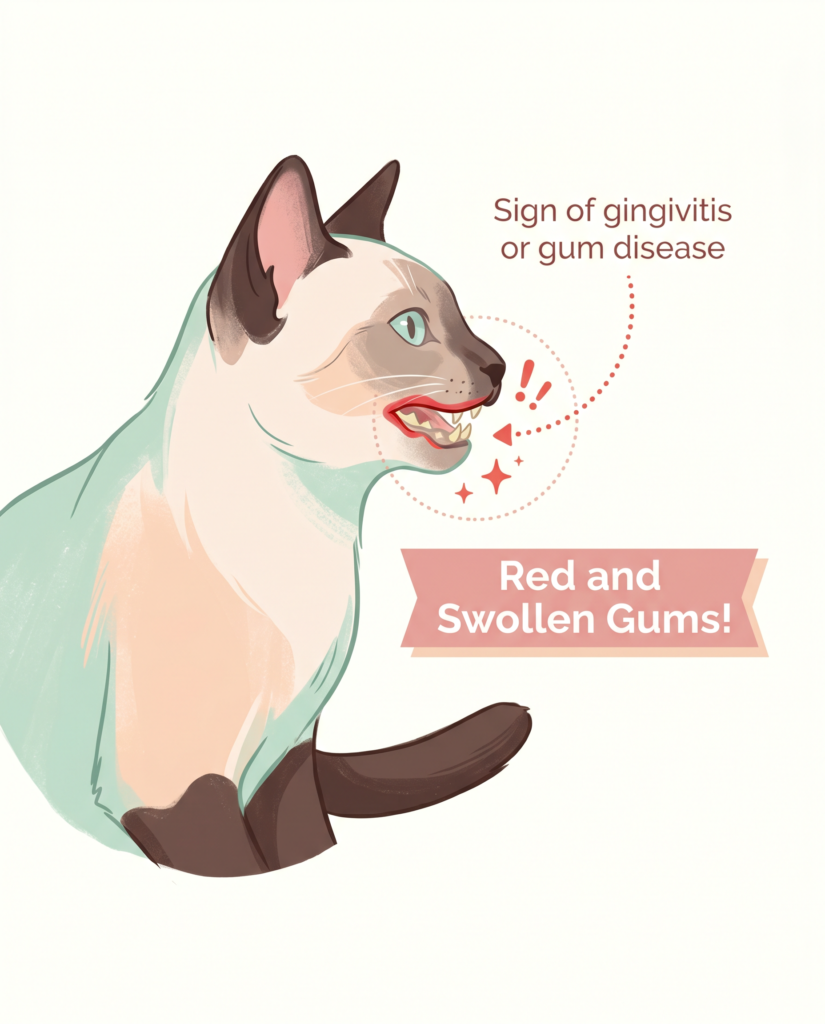
5. Red, Swollen, or Bleeding Gums
Healthy cat gums should be a consistent pale pink color firm, smooth, and with no visible inflammation. Red, puffy, or bleeding gums are a clear sign of gingivitis or more advanced periodontal disease. You might notice a red line running along the base of the teeth where the gum meets the tooth surface this is a classic early sign of gum disease. In more advanced cases the gums may bleed when touched or even spontaneously. Gum disease in cats is progressive it starts as gingivitis and can advance to tooth root infections, bone loss, and tooth loss if left untreated. Regularly checking your cat’s gums takes only seconds and can help you catch problems at the earliest and most treatable stage.
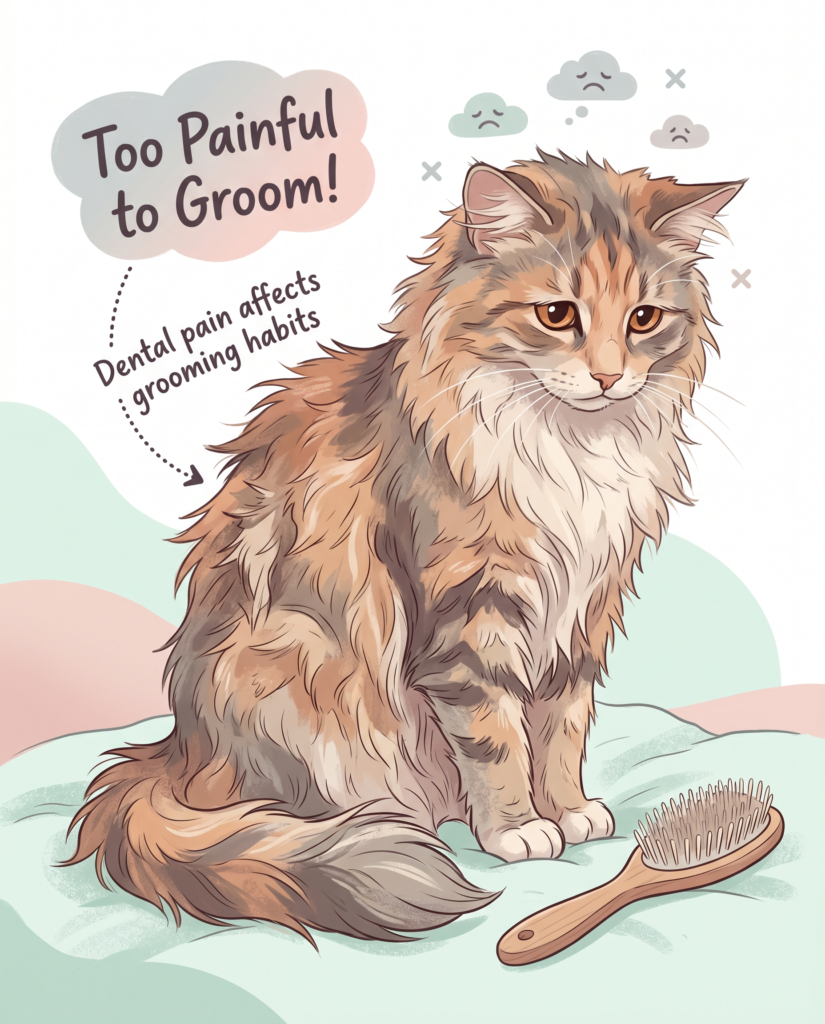
6. Reduced Grooming or Unkempt Coat
Cats are fastidious groomers and a sudden decline in grooming habits is always a sign that something is wrong. When dental pain makes opening the mouth uncomfortable, cats will often reduce or completely stop grooming because the repetitive mouth movements involved in licking and cleaning their coat aggravate the pain. A cat who was previously immaculate but has suddenly developed a dull, matted, or unkempt coat without any other obvious explanation may be suffering from oral pain. This is particularly easy to spot in long-haired breeds where the coat condition is very visible. If your cat’s grooming habits have changed significantly and you cannot identify another obvious cause, a dental examination is a logical and important next step.
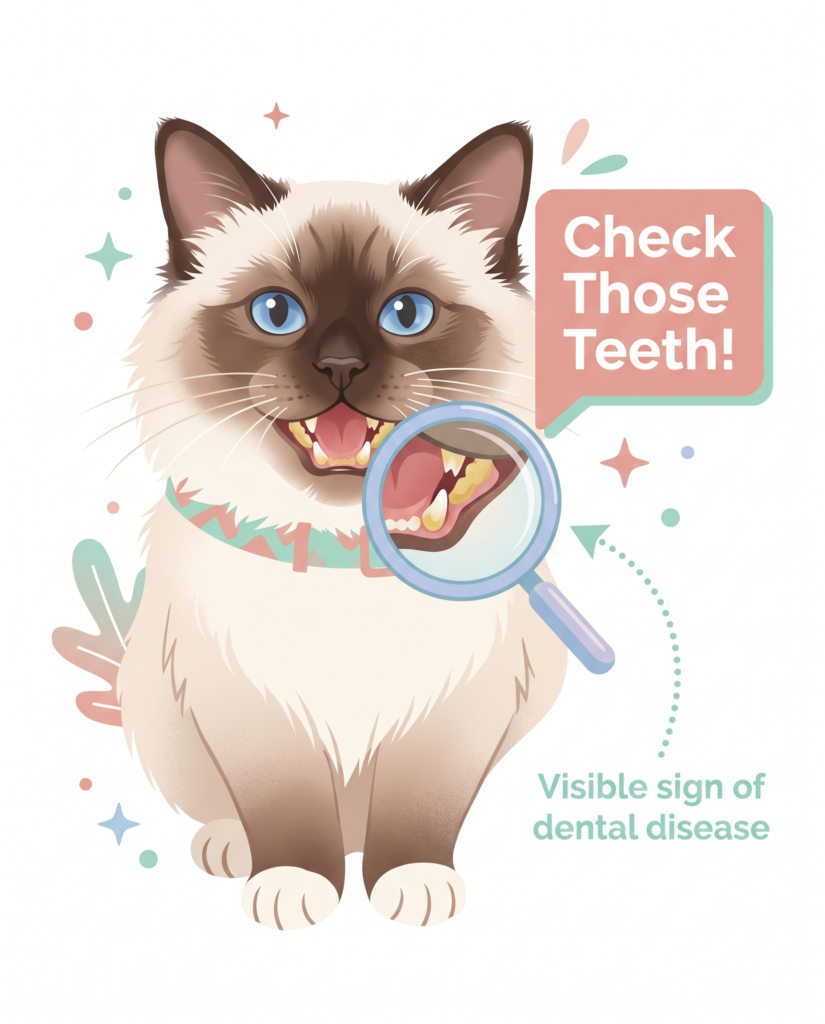
7. Visible Tartar, Broken Teeth, or Mouth Swelling
Sometimes dental problems are visible to the naked eye if you take a moment to look. Yellowy-brown tartar buildup along the base of the teeth, visibly broken or missing teeth, lumps or swelling around the jaw or cheeks, and ulcers or unusual growths inside the mouth are all signs that require prompt veterinary attention. Many cat owners never look inside their cat’s mouth and miss obvious problems that have been developing for months. Make it a habit to briefly check your cat’s mouth during grooming sessions. Gently lift the lips to check the teeth and gum line. You don’t need to open the mouth fully even a quick visual check of the outer teeth and gums can reveal significant problems early.
Dental disease is almost entirely preventable with regular home care and annual veterinary checkups. Start brushing your cat’s teeth today your cat’s long term health depends on it.