
8 Things Your Cat’s Tail Position Is Telling You
Your cat’s tail is one of the most expressive and honest communication tools in the feline world but most owners don’t know how to read it. A tail held high means something very different from a tail tucked low, and confusing the two could mean missing important signals about how your cat is really feeling. Here are 8 tail positions every cat owner should know and the exact emotion behind each one.
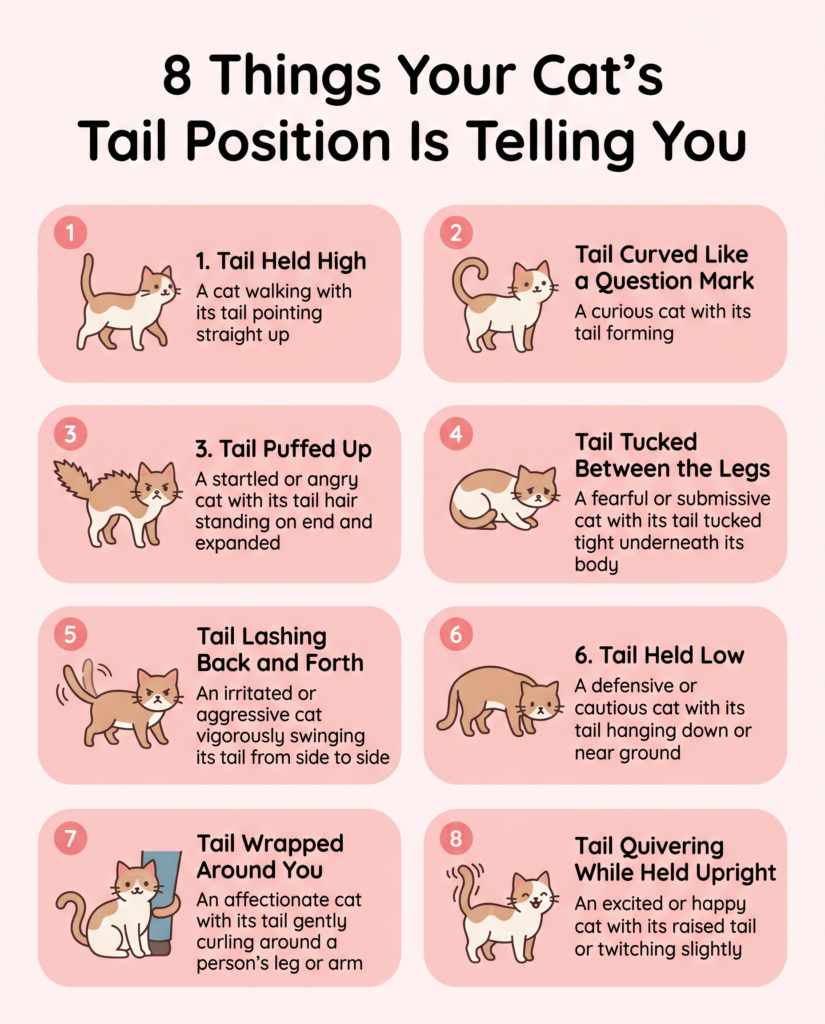
1. Tail Held High
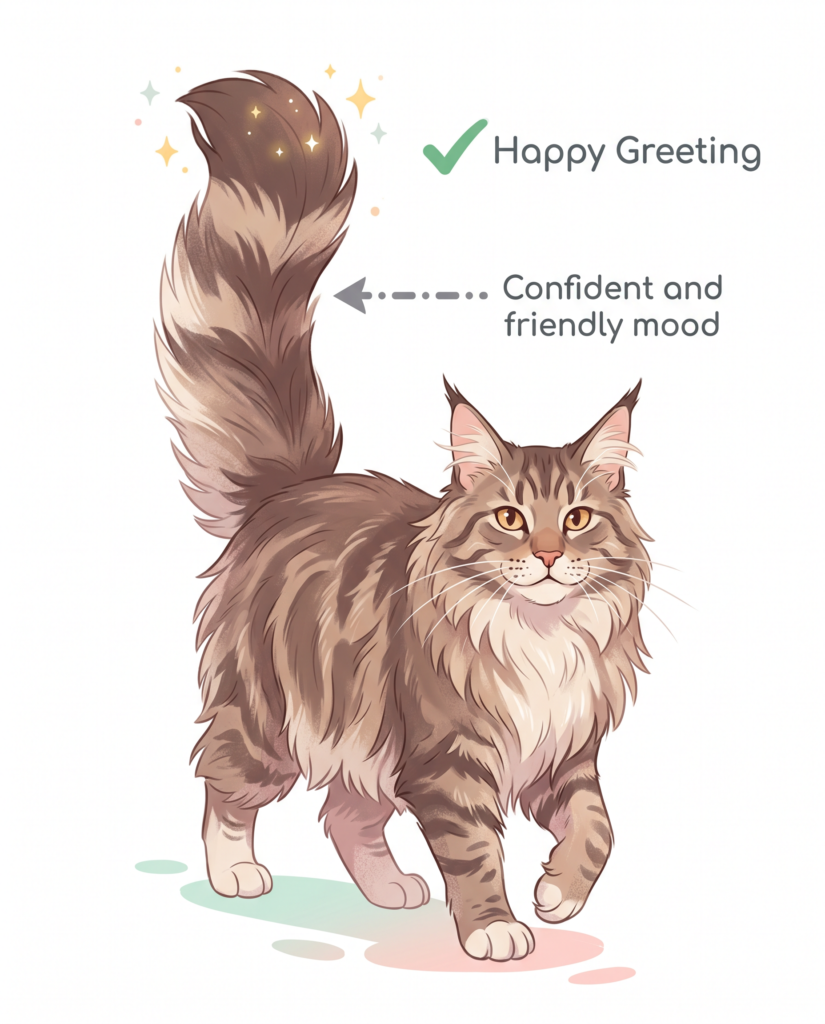
A cat walking toward you with their tail held straight up in the air is giving you one of the most positive signals in feline body language. This upright tail position is a confident, friendly greeting the cat equivalent of a warm hello. Cats who approach with a high tail are feeling secure, content, and happy to see you. Kittens greet their mothers this way, and adult cats carry this behavior into their relationships with trusted humans. If the tip of the tail is slightly curved or quivering while held high, the greeting is even more enthusiastic your cat is genuinely excited to see you. A high tail during approach almost always signals positive intentions and a relaxed, confident mood.
2. Tail Curved Like a Question Mark
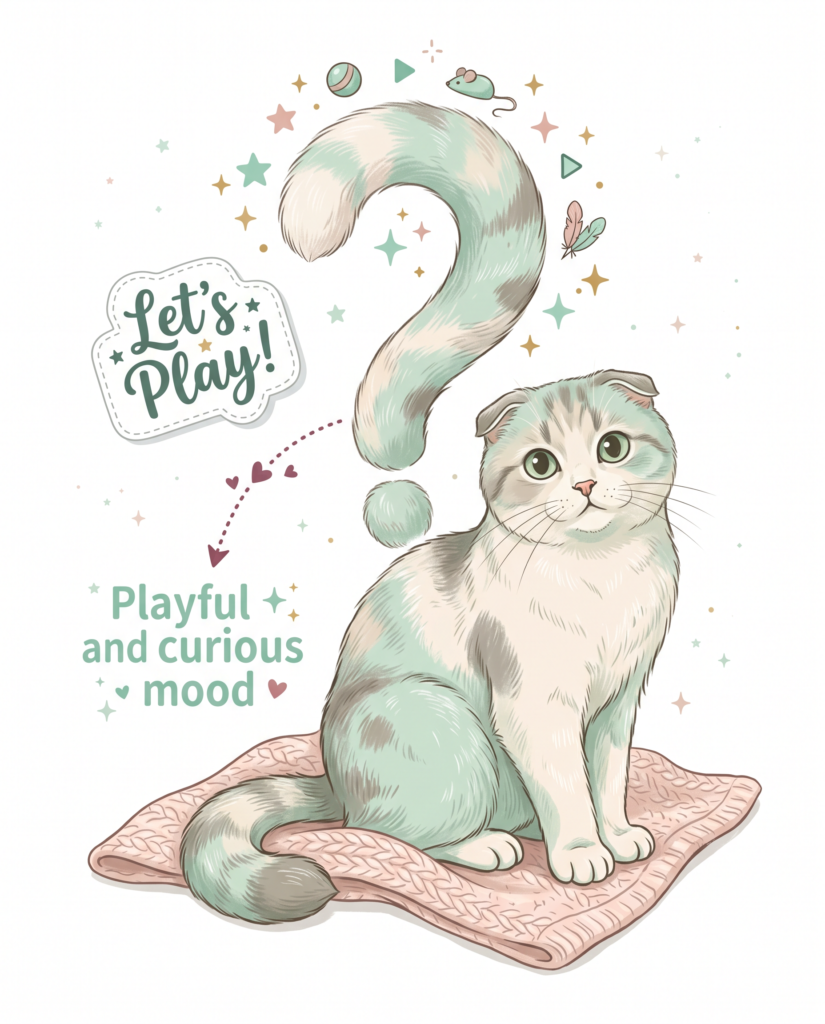
A tail curved at the tip into a question mark shape is an invitation to interact. Your cat is feeling playful, curious, and open to engagement. This is the perfect moment to initiate a play session or offer some affection. Cats often approach their favorite humans with this tail position when they are in a particularly sociable mood. It signals a relaxed confidence your cat feels safe enough to be curious and exploratory. If you see this tail position, take it as a green light to spend some quality time with your cat. They are actively seeking your company and interaction.
3. Tail Puffed Up
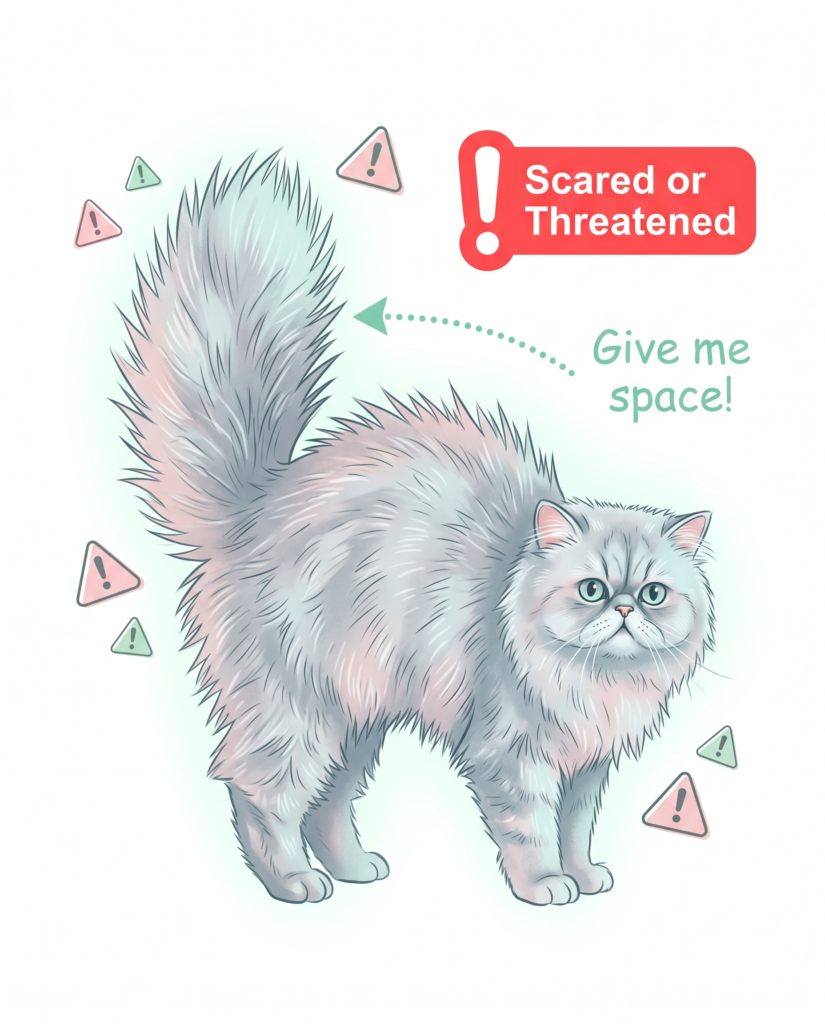
A dramatically puffed up tail where the fur stands on end making the tail look twice its normal size is a clear sign that your cat is frightened or feeling threatened. This response is called piloerection and it is an involuntary reaction designed to make the cat appear larger and more intimidating to a perceived threat. You will often see this tail position alongside an arched back, flattened ears, and wide eyes. Never approach or try to handle a cat displaying a puffed tail they are in a highly stressed state and may lash out defensively. Give your cat space and time to calm down, and try to identify and remove whatever is causing the fear response.
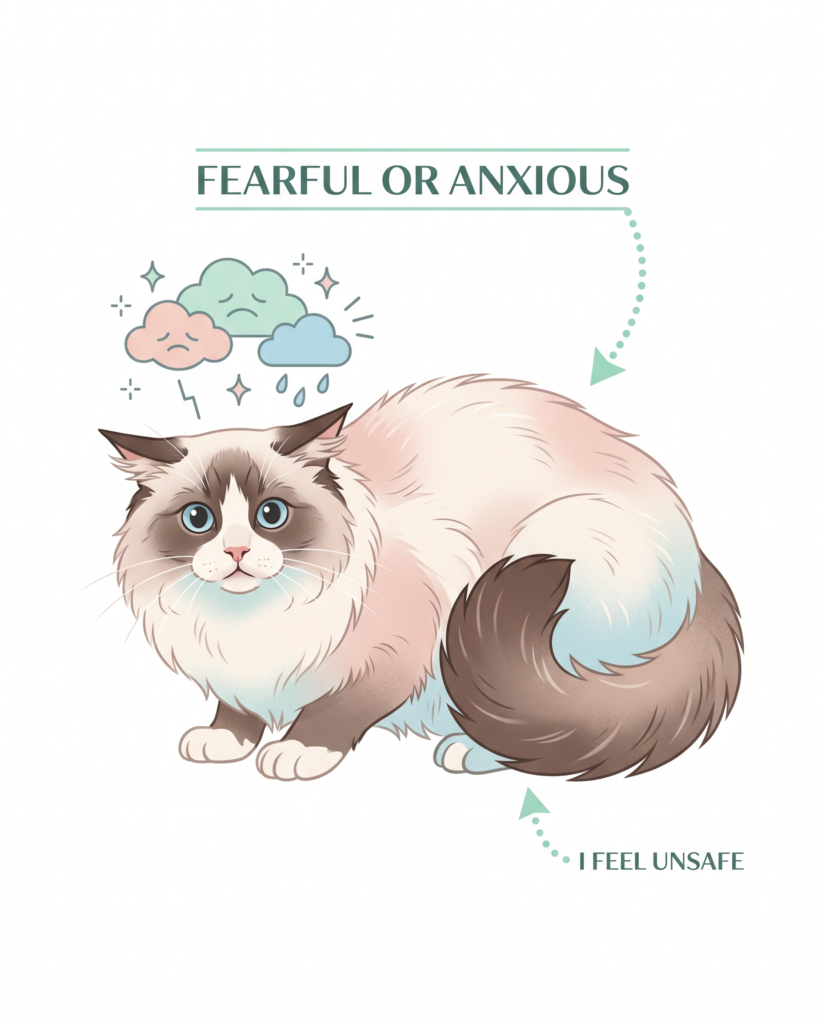
4. Tail Tucked Between the Legs
A tail tucked tightly between the legs and close to the body signals fear, submission, or extreme discomfort. This is your cat’s way of making themselves appear smaller and less threatening in a situation where they feel overwhelmed or unsafe. A cat with a consistently tucked tail may be chronically anxious or living in an environment that feels threatening to them. Pay close attention to what situations trigger this response. If your cat frequently tucks their tail, it is worth consulting your vet or a feline behaviorist to identify the source of their anxiety and find ways to help them feel more secure in their environment.
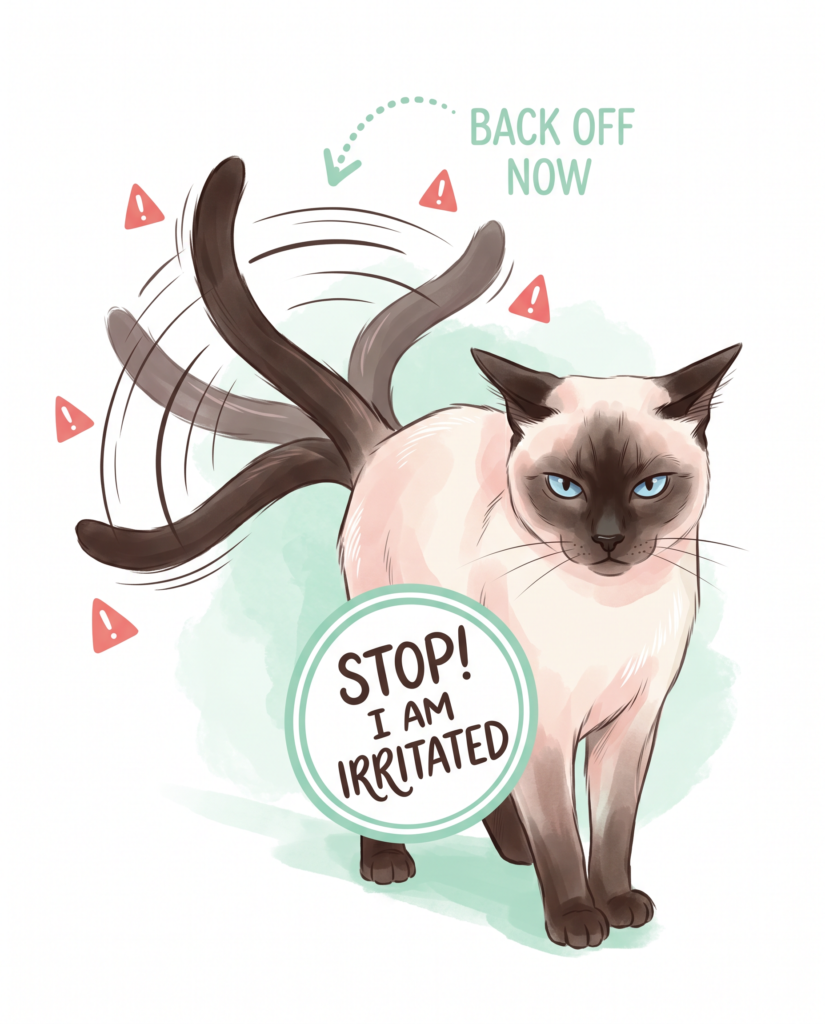
5. Tail Lashing Back and Forth
Unlike dogs, cats do not wag their tails when they are happy. A tail lashing rapidly back and forth from side to side is a warning signal. Your cat is feeling irritated, overstimulated, or agitated. This is one of the most important tail signals to recognize it often precedes a scratch or bite. If you are petting your cat and their tail starts lashing, stop immediately and give them space. Many cat scratches happen because owners miss or ignore this clear warning sign. The faster and more forceful the lashing, the more agitated your cat is feeling. Always respect this signal and back off before the situation escalates.
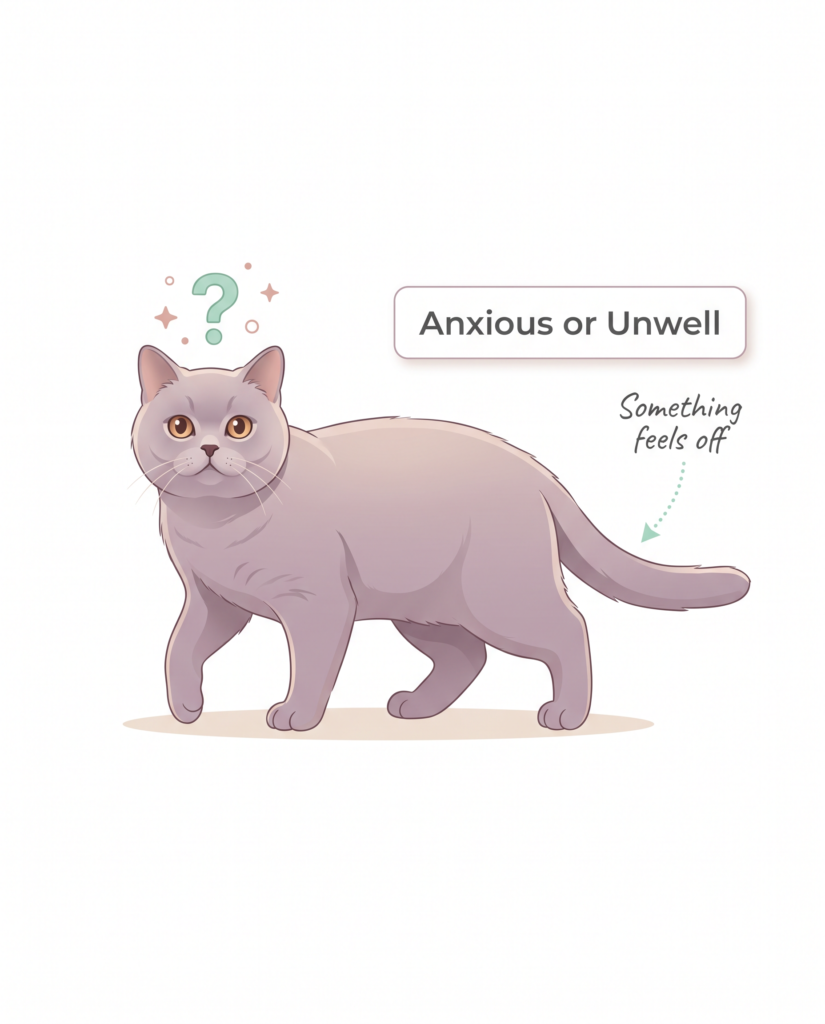
6. Tail Held Low or Parallel to the Ground
A tail carried low or parallel to the ground rather than upright can indicate that your cat is feeling uncertain, slightly anxious, or unwell. This is a more subtle signal than a tucked tail but still worth noting. Some breeds naturally carry their tails lower than others, so it is important to know what is normal for your individual cat. A sudden change from a normally upright tail to a consistently low carried tail can be an early indicator of pain or illness. If you notice this change alongside other signs like reduced appetite, lethargy, or changes in behavior, a vet visit is a good idea.
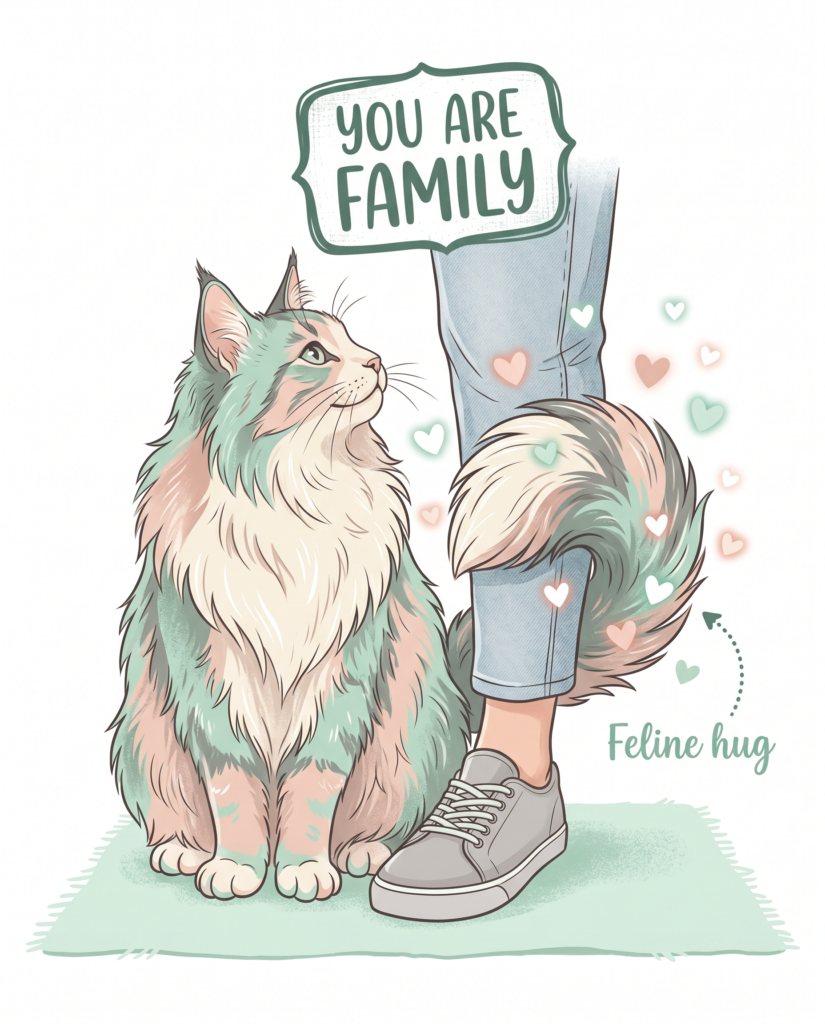
7. Tail Wrapped Around You or Another Cat
When your cat wraps their tail around your leg, arm, or another cat, it is a gesture of affection and social bonding. This is the feline equivalent of a hug or putting an arm around someone. Cats who wrap their tails around each other are demonstrating a close, comfortable social bond. When your cat does this to you, they are including you in their inner social circle. It is a quiet, understated gesture but one that carries significant meaning. A cat who regularly tail-wraps you is a cat who considers you family and feels deeply comfortable in your presence.
8. Tail Quivering While Held Upright
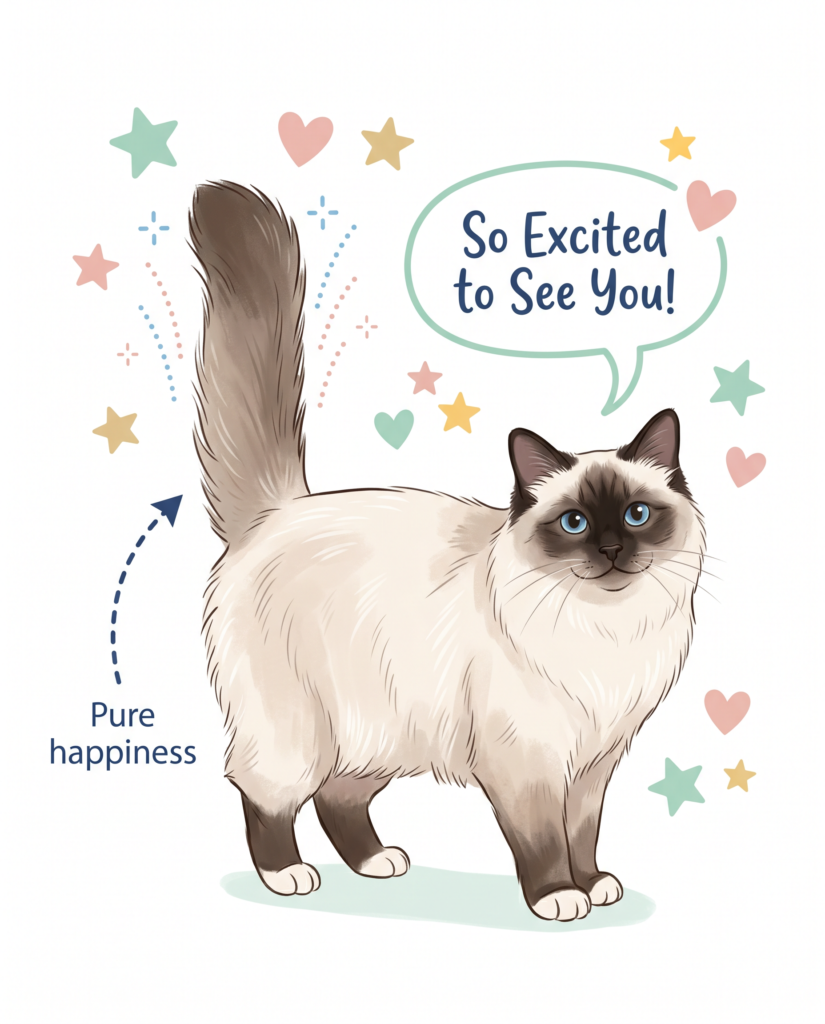
A tail held straight up and quivering or vibrating rapidly is one of the most enthusiastic expressions of excitement and happiness a cat can display. You will most often see this when your cat greets you after you have been away, when they anticipate something wonderful like a meal or a play session, or when they are particularly excited to see a favorite person. This quivering tail is pure positive emotion — your cat is so happy they simply cannot contain it. Some cats also display this quivering tail when they are scent marking vertical surfaces, but in a greeting context it is always a sign of great excitement and affection.
Learning to read your cat’s tail language takes time and observation but it is one of the most rewarding skills a cat owner can develop. The more you understand your cat’s signals, the stronger and more harmonious your relationship will become.