
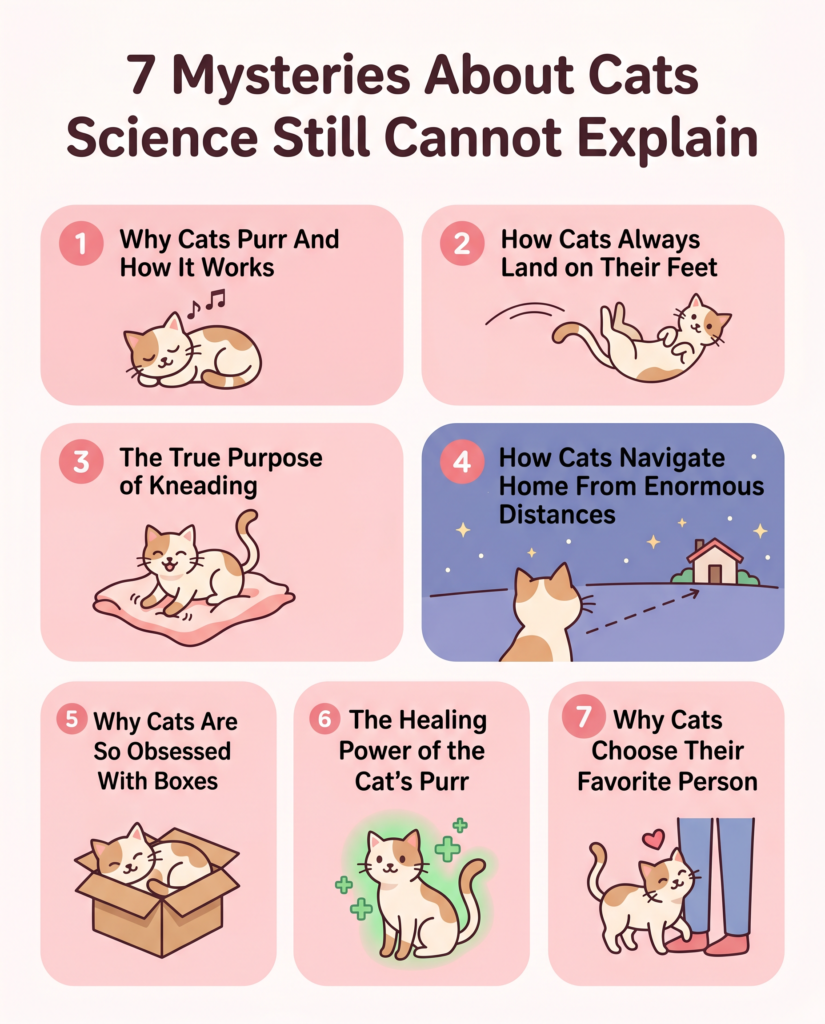
7 Mysteries About Cats Science Still Cannot Explain
Cats have lived alongside humans for thousands of years and yet they remain one of the most scientifically puzzling creatures on the planet. Despite decades of research, there are aspects of feline biology and behavior that researchers simply cannot fully explain. Here are 7 genuine cat mysteries that continue to baffle scientists to this day.
1. Why Cats Purr — And How It Actually Works
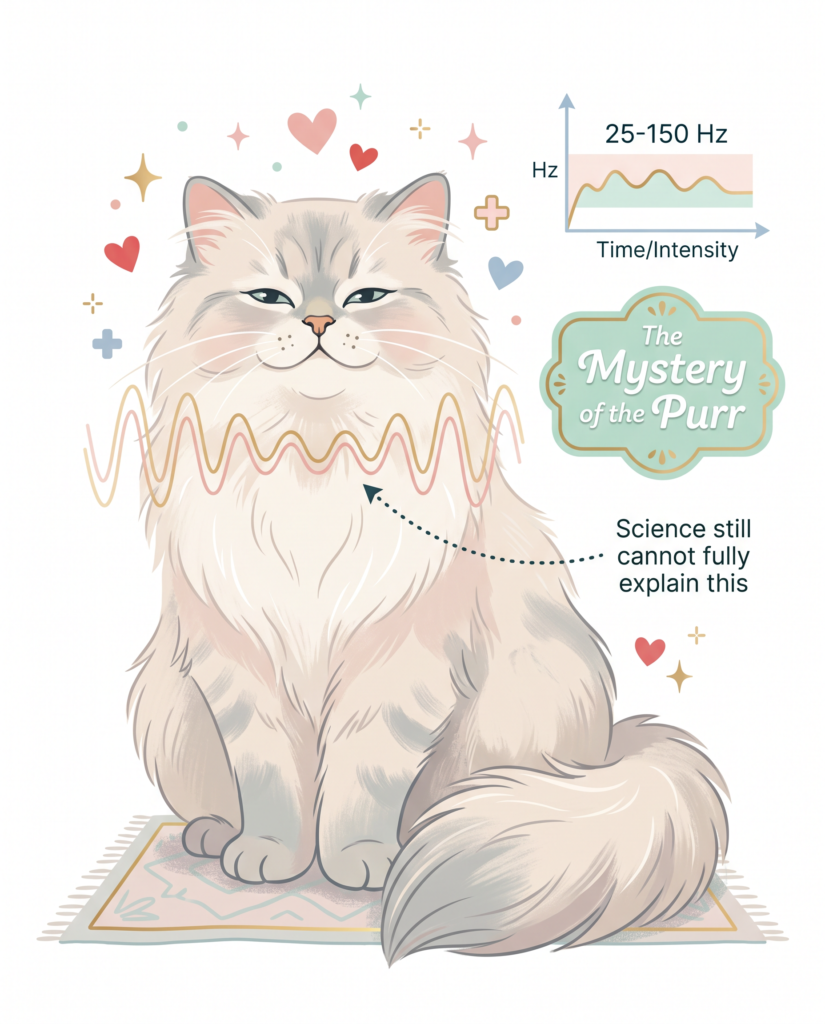
Purring is perhaps the most iconic cat behavior in existence and one of the least understood. While most people assume cats purr simply when they are happy, the reality is far more complex and mysterious. Cats purr when they are content, yes but also when they are stressed, injured, giving birth, and even when they are dying. The precise neurological mechanism that produces purring is still not fully understood. What researchers do know is that cats produce the purring sound through a rapid, rhythmic dilation and constriction of the glottis the part of the larynx surrounding the vocal cords during both inhalation and exhalation. This produces a continuous sound at a frequency of between 25 and 150 hertz. What makes this particularly fascinating is that these frequencies have been shown in research to promote bone density, accelerate healing of soft tissue, reduce pain and swelling, and even lower blood pressure. Some researchers have proposed that purring may have evolved as a self-healing mechanism a way for cats to maintain bone and tissue health during the long periods of rest that characterize feline life. But exactly why cats purr in distressing situations as well as pleasant ones remains genuinely unexplained.
2. How Cats Always Land on Their Feet
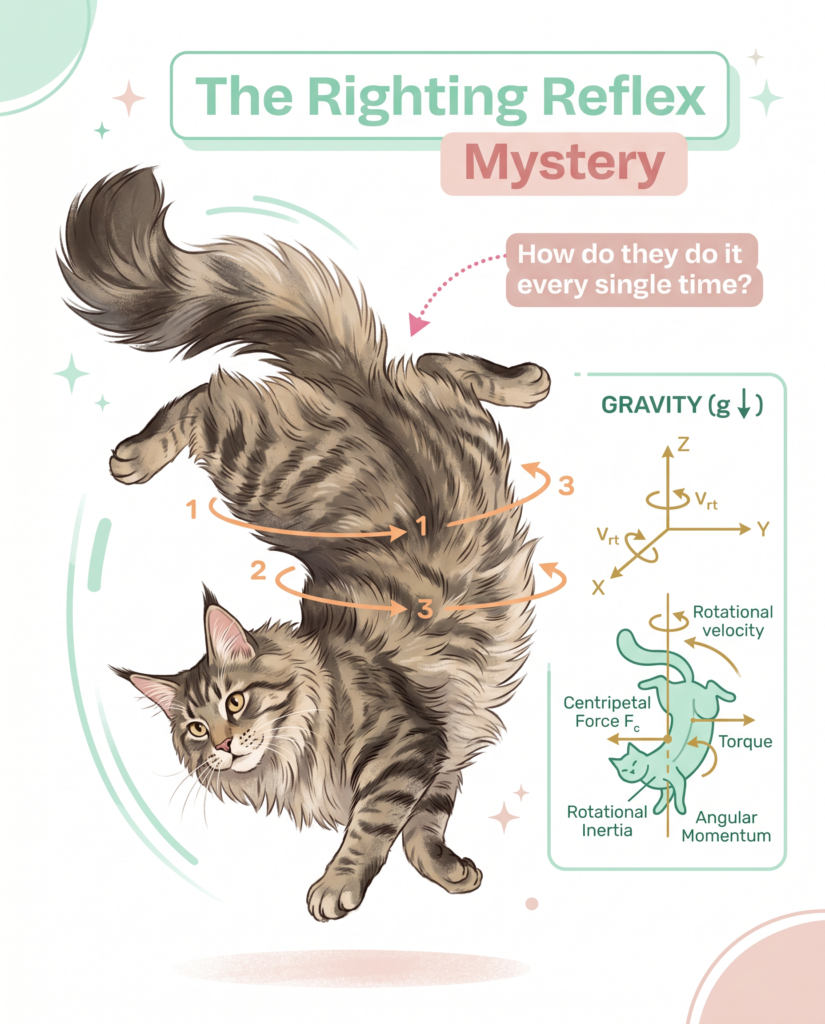
The feline righting reflex the ability of cats to orient themselves during a fall and land feet-first is one of the most remarkable physical abilities in the animal kingdom. Cats can detect which way is up using their vestibular system in the inner ear, then rotate their body in mid-air to align their feet toward the ground. What makes this truly mysterious is that it functions at extremely short distances cats can complete the righting reflex in falls of as little as 30 centimeters. Even more puzzling is the “high-rise syndrome” phenomenon the observation that cats falling from very high buildings sometimes survive with fewer injuries than cats falling from medium heights. The proposed explanation is that cats reach terminal velocity the point at which gravitational acceleration is balanced by air resistance and then relax their bodies into a spread-eagle position that acts as a natural parachute. But the precise mechanics of how the righting reflex is initiated so rapidly and reliably, and how cats instinctively know to relax at terminal velocity, remains incompletely understood.
3. The True Purpose of Kneading
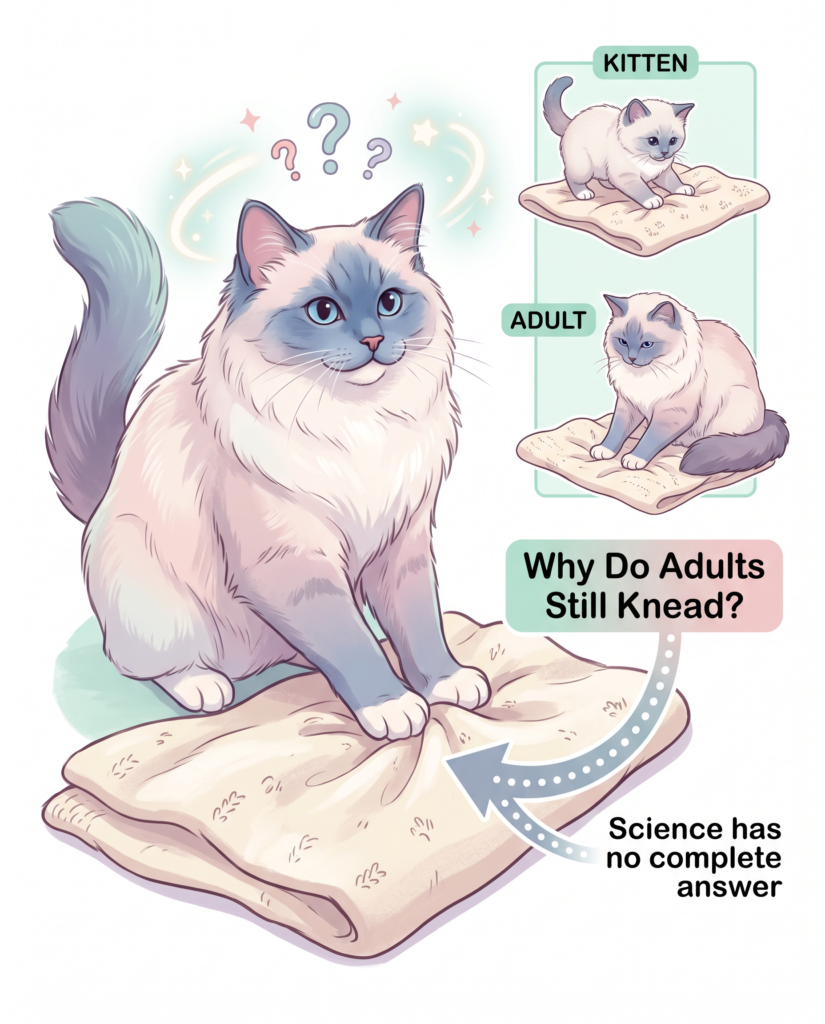
Every cat owner knows the behavior the rhythmic, alternating pushing of the front paws against a soft surface, sometimes called “making biscuits.” Kneading originates in kittenhood as a behavior that stimulates milk flow from the mother. The mystery is why adult cats continue this behavior throughout their entire lives often with the same intensity and apparent emotional investment as kittens. Most adult mammals abandon nursing-related behaviors after weaning. Cats are unusual in retaining and even intensifying these behaviors. Some researchers suggest that kneading in adult cats may have evolved from its original function into a broader self-soothing and comfort mechanism. Others propose it is a territorial scent-marking behavior, since cats have scent glands in their paw pads. But no single explanation fully accounts for all the contexts in which adult cats knead on their owners, on soft surfaces, in the air, before sleeping, and during moments of both contentment and apparent anxiety.
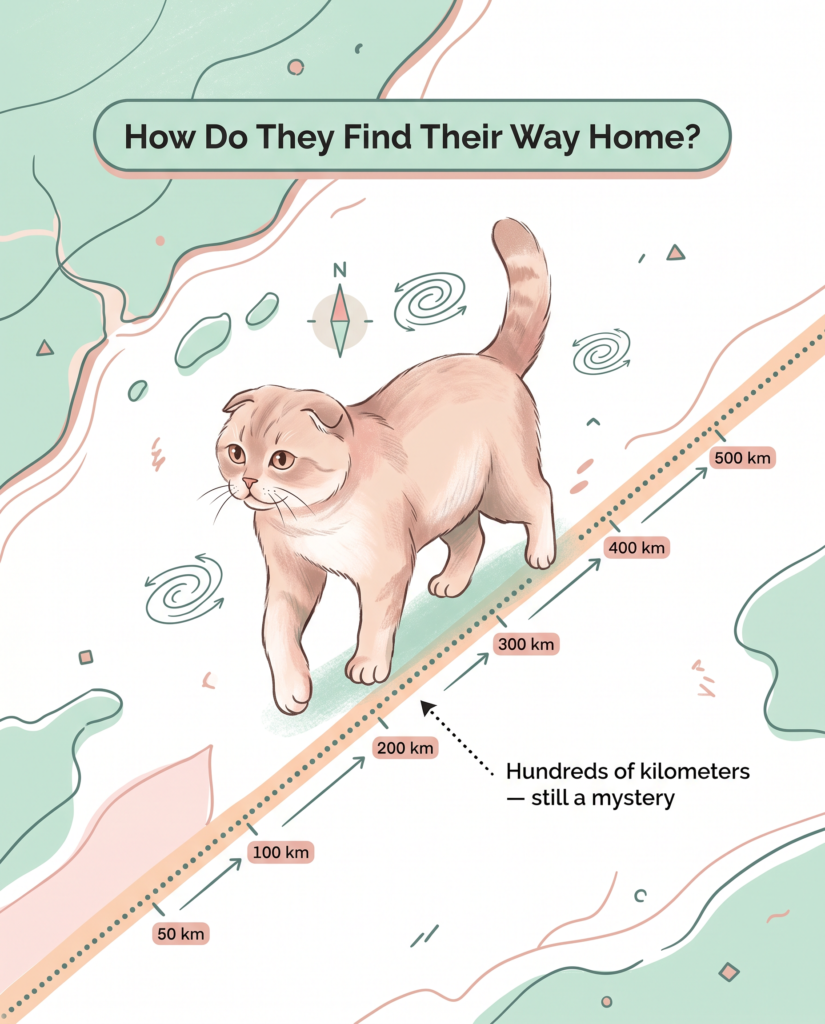
4. How Cats Navigate Home From Enormous Distances
There are numerous documented cases of cats finding their way home after being separated from their families by distances of hundreds or even thousands of kilometers crossing unfamiliar terrain, navigating cities they have never visited, and arriving weeks or months later at the correct address. This ability known as psi-trailing has been documented and studied but never satisfactorily explained. Cats do not have GPS. They cannot read maps. The leading theories involve a combination of magnetic field sensitivity the ability to detect the Earth’s magnetic field and use it for orientation acute sensitivity to familiar scent trails carried on the wind, and an extraordinarily detailed spatial memory. But none of these theories fully explains documented cases of cats navigating to new addresses their owners moved to after the cat was lost places the cat had never visited. How cats accomplish this remains one of the most genuinely puzzling unsolved questions in animal behavior research.
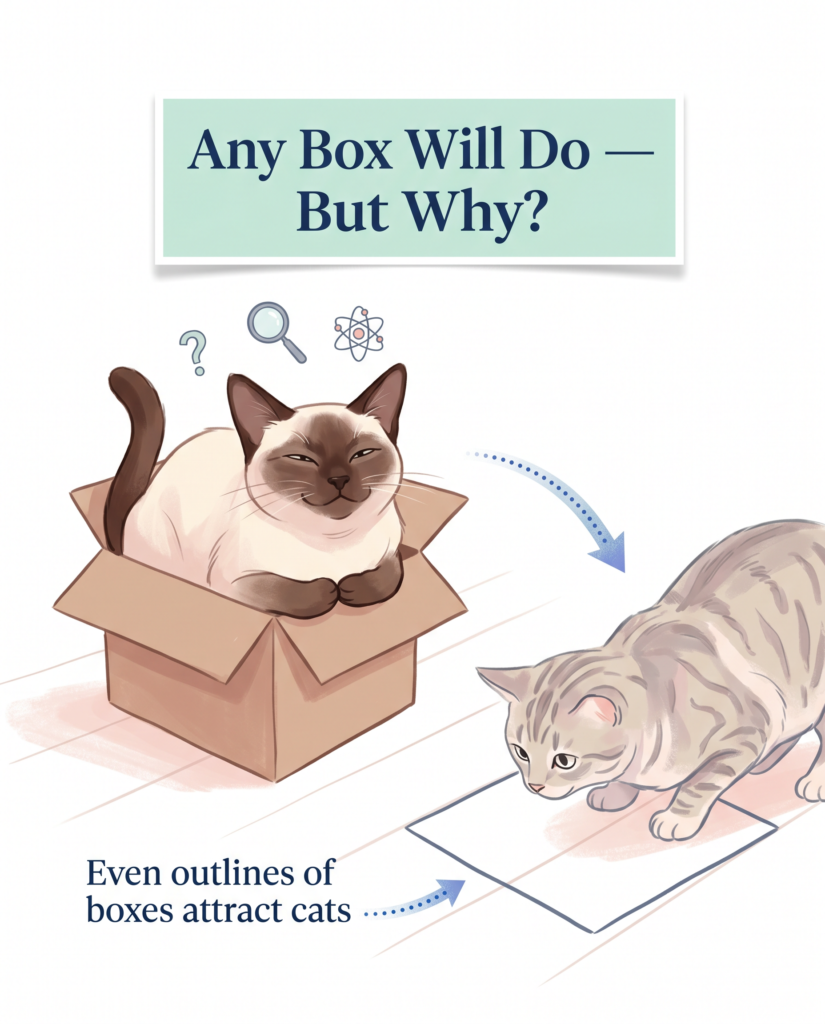
5. Why Cats Are So Obsessed With Boxes
The internet has had great fun with the observation that cats will sit in any box, regardless of size and researchers have actually studied this phenomenon seriously. The leading explanation involves the stress-reducing properties of enclosed spaces research published in Applied Animal Behaviour Science demonstrated that shelter cats given access to boxes showed significantly lower stress indicators and adapted to their new environment faster than cats without boxes. But what remains unexplained is the remarkable indiscriminateness of the behavior. Cats will attempt to sit in boxes that are clearly too small, in taped square outlines on the floor that are not boxes at all, and in circles and shapes that provide no actual enclosure. Research has shown that cats will even attempt to sit inside two-dimensional square outlines a phenomenon researchers call the Kanizsa square illusion response. Why cats respond to the mere suggestion or outline of an enclosed space with the same apparent compulsion as an actual box is not fully understood.
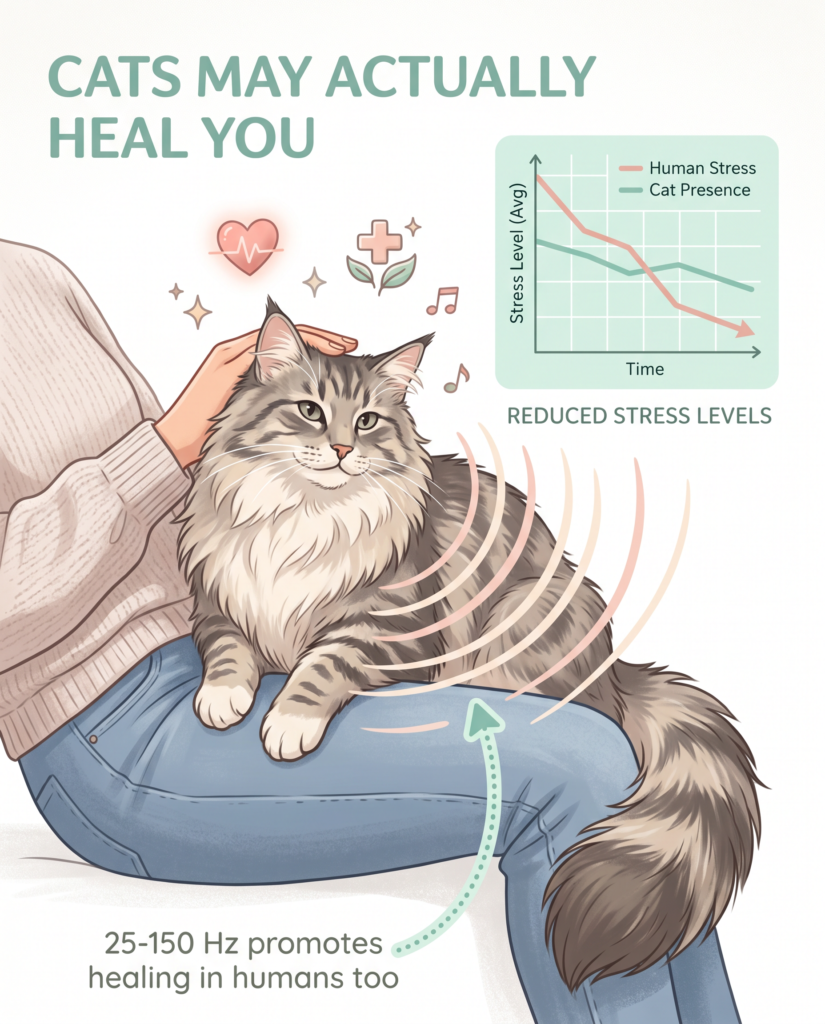
6. The Healing Power of the Cat’s Purr
Building on the mystery of purring itself, there is a separate and equally puzzling phenomenon the apparent healing effect of cats on their human owners. Multiple studies have found associations between cat ownership and reduced risk of heart attack and stroke, lower blood pressure, reduced cortisol levels, and faster recovery from illness. Some of these effects appear to be specifically linked to the act of stroking a purring cat. The frequency range of a cat’s purr between 25 and 150 hertz overlaps with frequencies used in therapeutic medicine to promote tissue healing, reduce inflammation, and stimulate bone growth. Whether the healing associations observed in cat owner studies are caused by this frequency, by the psychological comfort of companionship, by the stress-reducing effect of gentle touch, or by some combination of all three is not yet established. The mechanism remains a genuine scientific mystery.
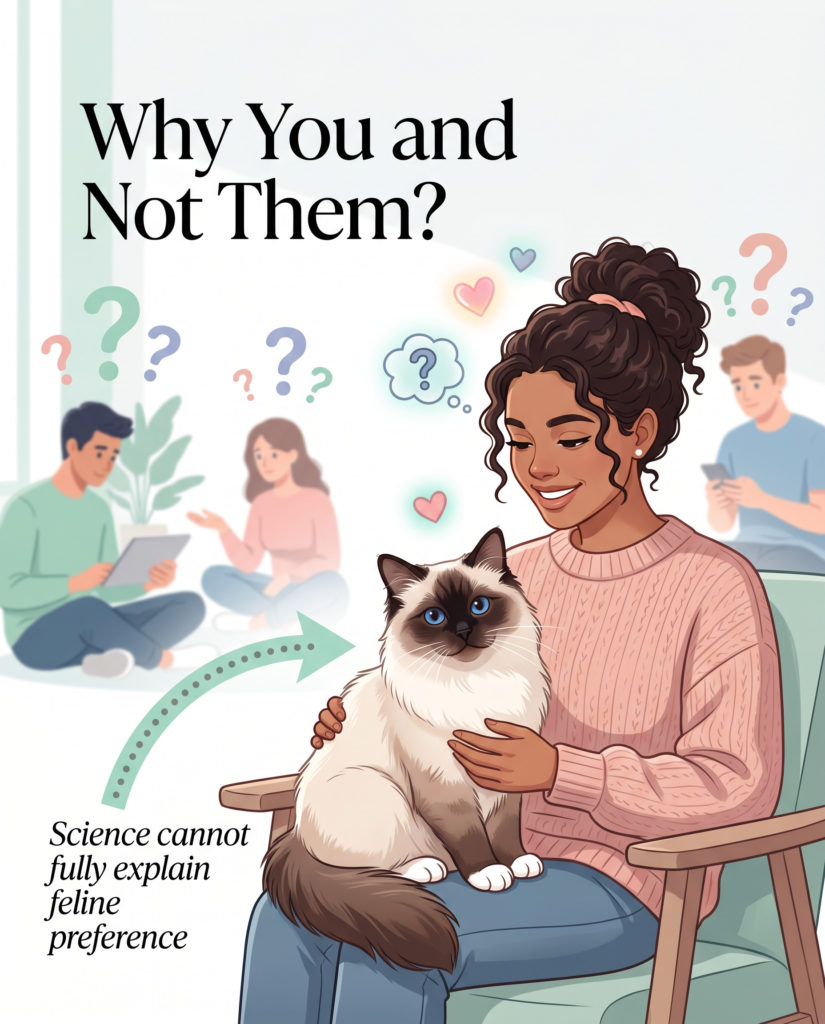
7. Why Cats Choose Their Favorite Person
Every multi-person household with a cat knows the phenomenon the cat who definitively, consistently, and sometimes inexplicably chooses one specific person as their primary attachment figure. This person receives the slow blinks, the head bunts, the lap sitting, and the 3am face sitting. Everyone else receives polite indifference at best. Researchers have identified some factors that seem to influence a cat’s attachment preferences people who allow the cat to initiate and control interactions, who move quietly and calmly, and who engage in activities the cat finds interesting tend to be preferred. But these factors don’t fully explain the seemingly arbitrary nature of many feline preferences. Cats sometimes form their deepest attachments to the household member who pays them the least attention, and show indifference to people who actively try to bond with them. The precise combination of factors scent, body language, voice frequency, behavioral patterns, or something else entirely that determines who a cat chooses as their person remains genuinely and fascinatingly unexplained.
Cats have shared our homes and our lives for thousands of years and they are still keeping their secrets. Perhaps that mystery is part of what makes them so endlessly captivating.