
10 Things Your Cat Does When You Are Not Home
Most cat owners assume their cat spends the entire day sleeping peacefully while they are at work. The reality is far more interesting and sometimes far more surprising. Here are 10 things your cat actually does when you are not home, backed by research, hidden camera footage, and feline behavioral science.
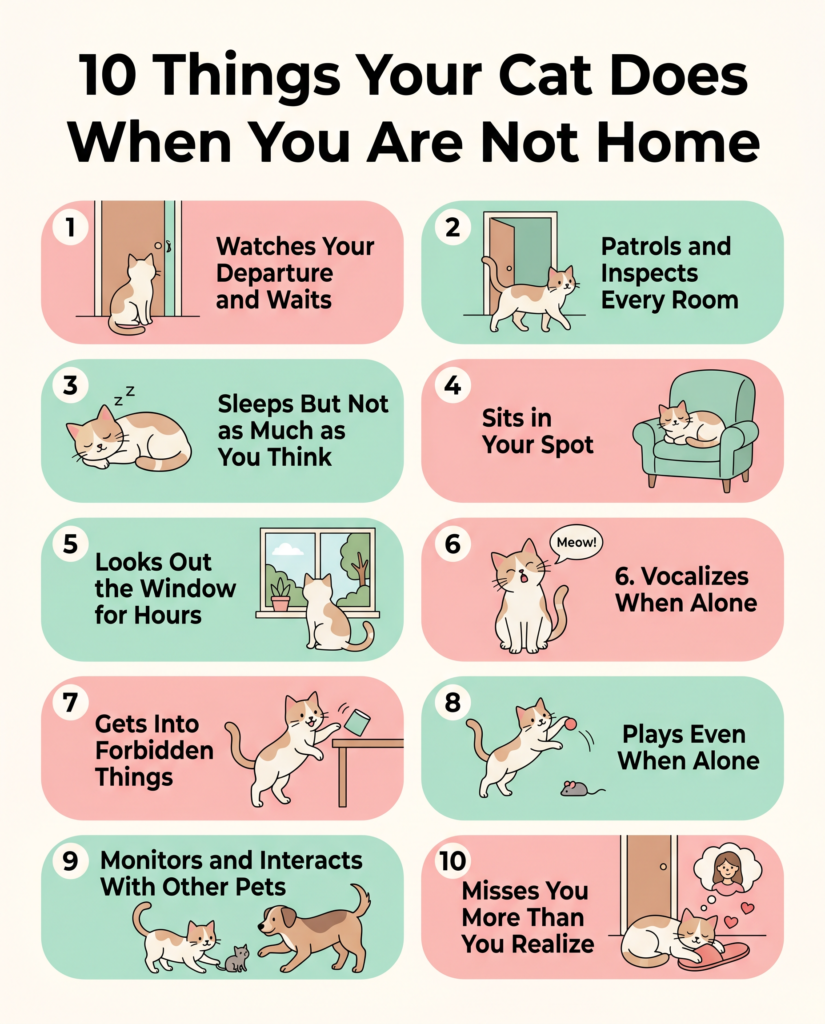
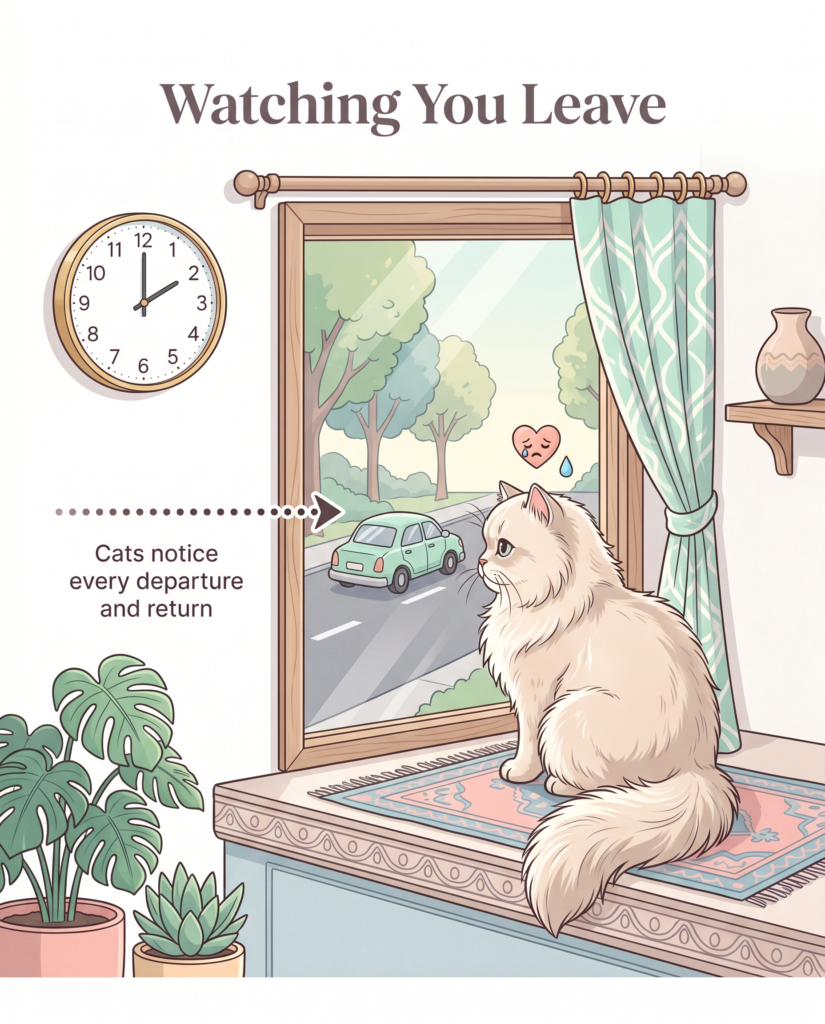
1. Watches Your Departure — And Waits for Your Return
The moment you leave, your cat is paying close attention. Research using hidden cameras has shown that many cats watch their owners leave, often sitting at the window or door long after the sound of the car has faded. Contrary to the popular belief that cats are indifferent to their owners’ presence, studies have demonstrated that cats show clear signs of attachment and do notice and respond to their owner’s absence. Some cats will sit at the door or window at the approximate time their owner normally returns suggesting they have developed a strong internal sense of their owner’s routine and schedule. Cats are far more attuned to human patterns and rhythms than most people realize, and your departure and return are among the most significant events in their daily experience.
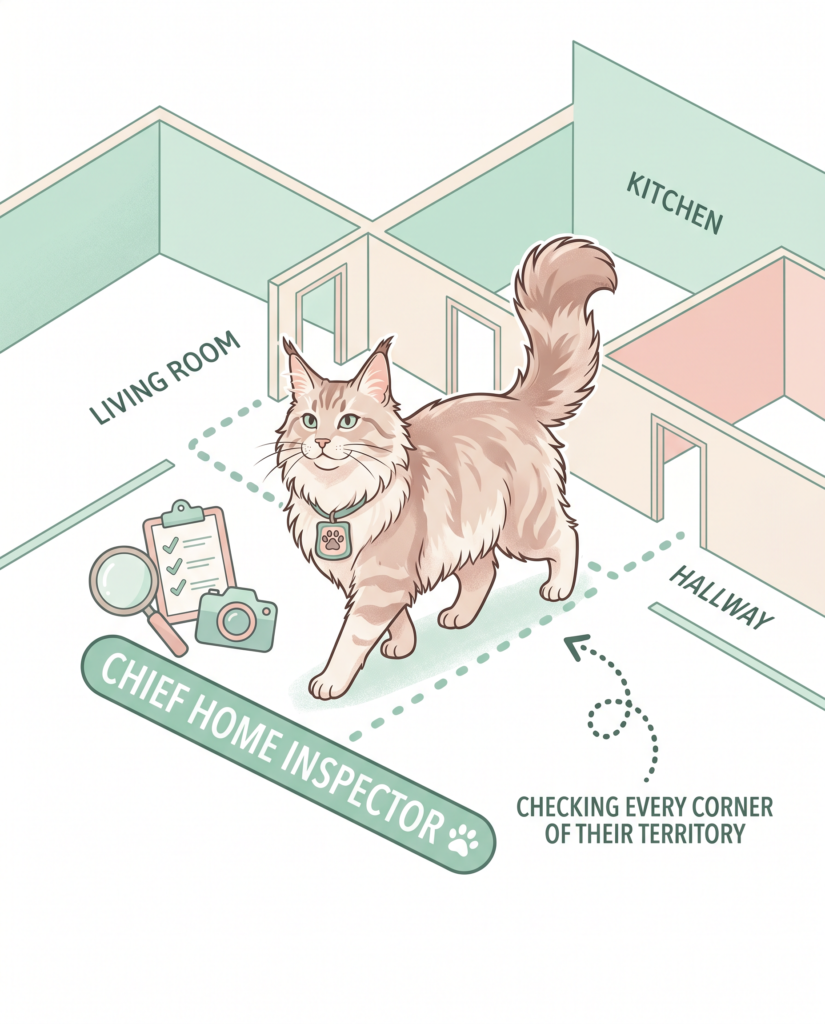
2. Patrols and Inspects Every Room
Once you are gone, many cats conduct a thorough inspection of the entire home. Hidden camera footage frequently shows cats methodically moving from room to room, sniffing surfaces, checking familiar spots, and investigating any changes or new scents that appeared since their last inspection. This patrol behavior is rooted in territorial instinct your cat is the guardian of their domain and takes this responsibility seriously. They are checking that everything is in order, that no intruders have entered, and that the scent boundaries of their territory are intact. Cats who share a home with other pets will often patrol more frequently and more systematically, monitoring the locations and activities of their housemates throughout the day.
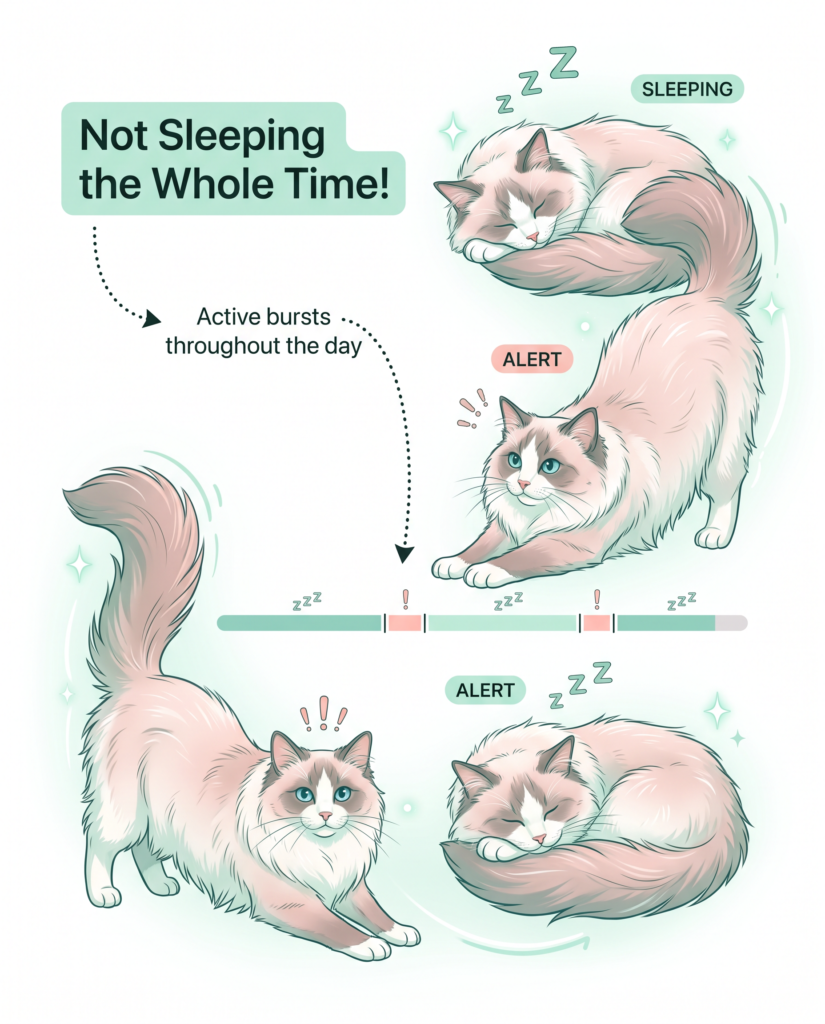
3. Sleeps — But Not as Much as You Think
Yes, cats sleep a lot between 12 and 16 hours per day on average. But the distribution of that sleep throughout the day is often surprising. Rather than sleeping solidly for the entire time you are away, most cats cycle through periods of activity and sleep throughout the day, with their most active periods typically coinciding with dawn and dusk the times when their prey would naturally be most active. Hidden cameras frequently capture cats who appear to be sleeping peacefully suddenly becoming alert, active, and investigative for 20-30 minute bursts before settling back down again. Your cat is not simply unconscious for eight hours while you work they are cycling through natural activity patterns that happen to include a great deal of rest.
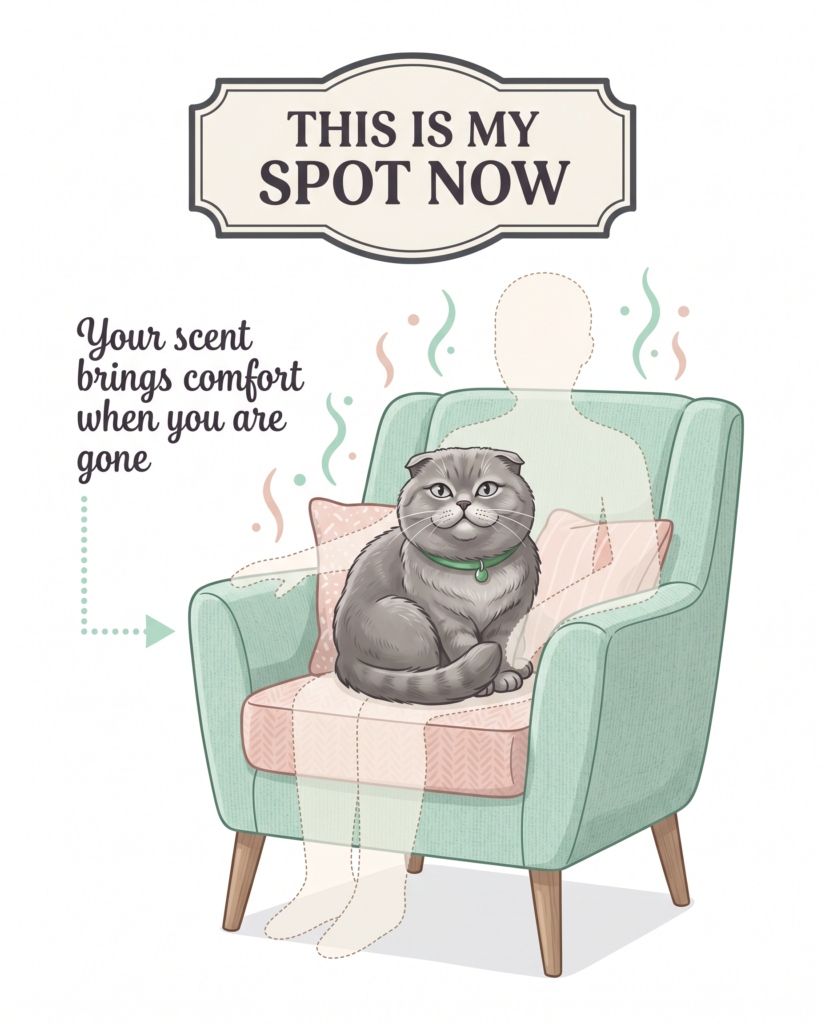
4. Sits in Your Spot
Your favorite chair, your side of the bed, your desk chair hidden camera footage consistently shows cats gravitating toward their owner’s preferred spots during their absence. This behavior has a straightforward and rather touching explanation: your scent is strongest in the places where you spend the most time. Your cat finds comfort and security in your scent, and sitting in your spot allows them to surround themselves with the familiar smell of their person during the hours when you are not physically present. This is also why cats frequently sleep on their owner’s clothing left on the bed or chair it is not a coincidence or mischief but a deliberate choice driven by the comfort of familiar scent.
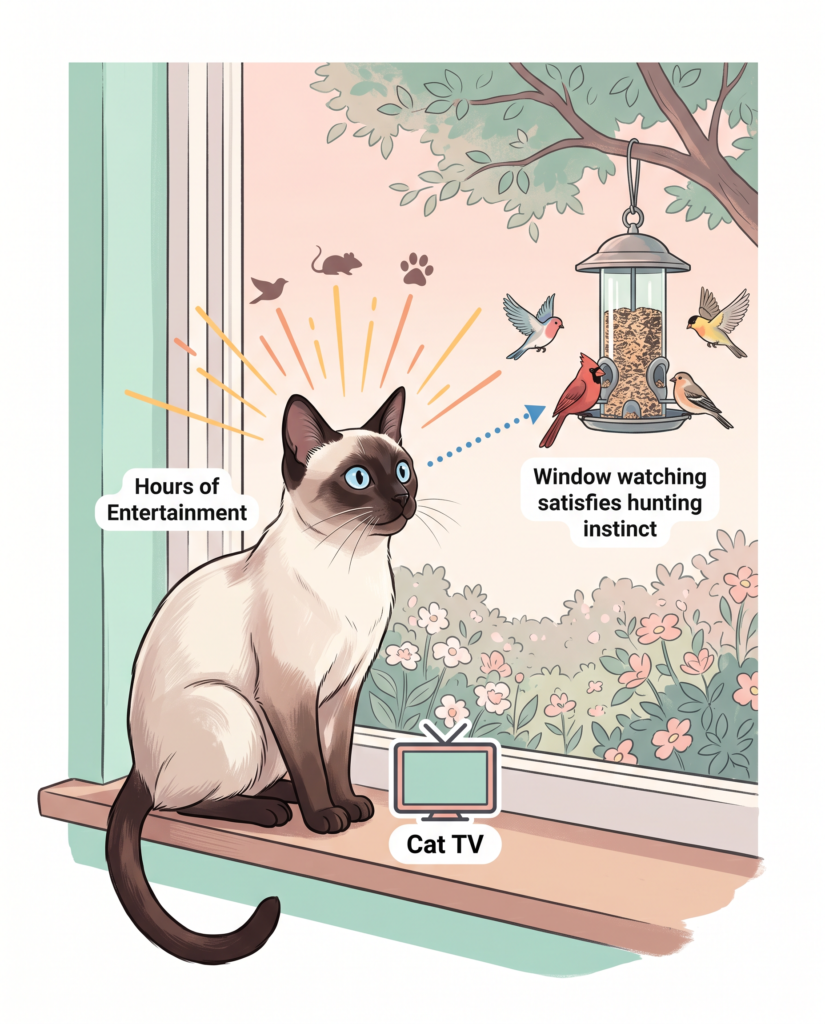
5. Looks Out the Window for Hours
Window watching is one of the most consistently observed cat behaviors captured by hidden cameras during owner absence. Cats will spend significant portions of the day perched at windows, watching birds, squirrels, passing pedestrians, cars, and any other movement in the outside world. This activity sometimes called “cat TV” provides crucial mental stimulation for indoor cats who have limited other sources of environmental enrichment. The hunting instinct is activated by the movement of birds and small animals outside the window, providing a form of mental exercise even without physical activity. Cats who have access to good window views are generally calmer, less destructive, and better adjusted than cats with no visual access to the outside world.
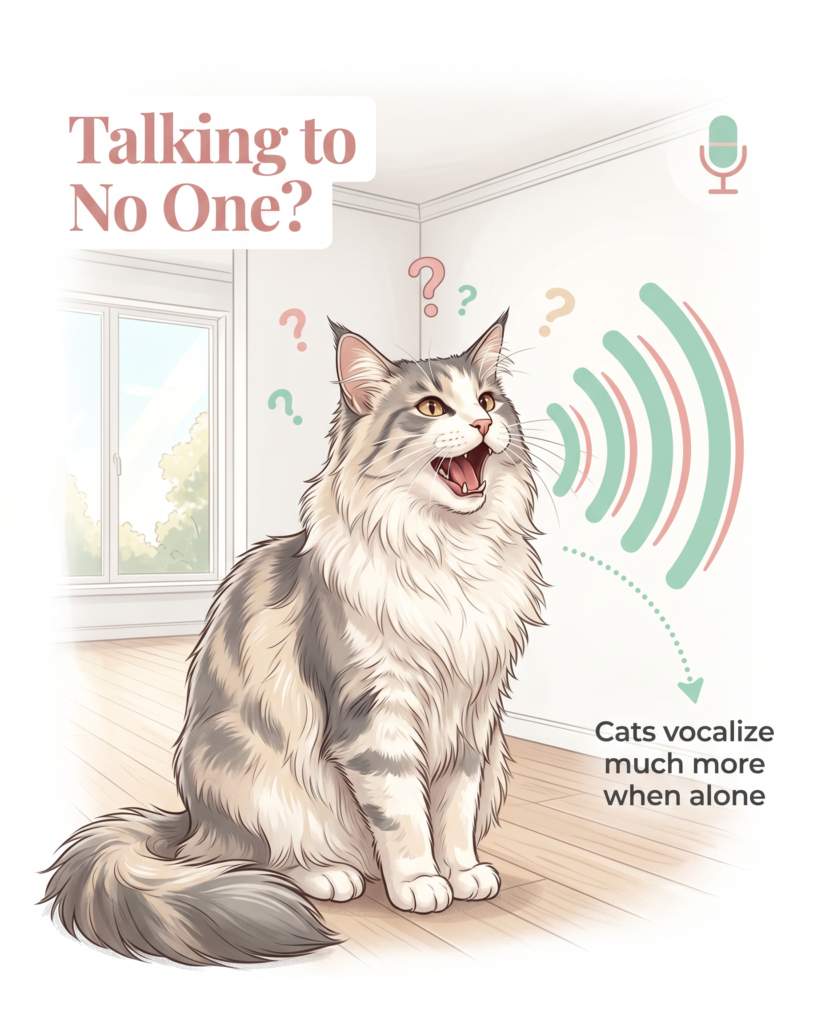
6. Vocalizes — Sometimes a Lot
Hidden microphones placed in homes during owner absence have captured something that surprises many cat owners some cats vocalize significantly more when alone than when their owners are present. Some cats meow, chirp, trill, and call out repeatedly during periods of the day, apparently directing these vocalizations at no one in particular. The exact purpose of this solo vocalization is not fully understood. Some behaviorists suggest it may be a form of self-soothing the same way some humans talk to themselves when alone. Others propose it may be a form of communication directed at the owner in their absence, or simply an expression of the frustration of being alone. Cats who are more prone to separation anxiety tend to vocalize more during owner absence.
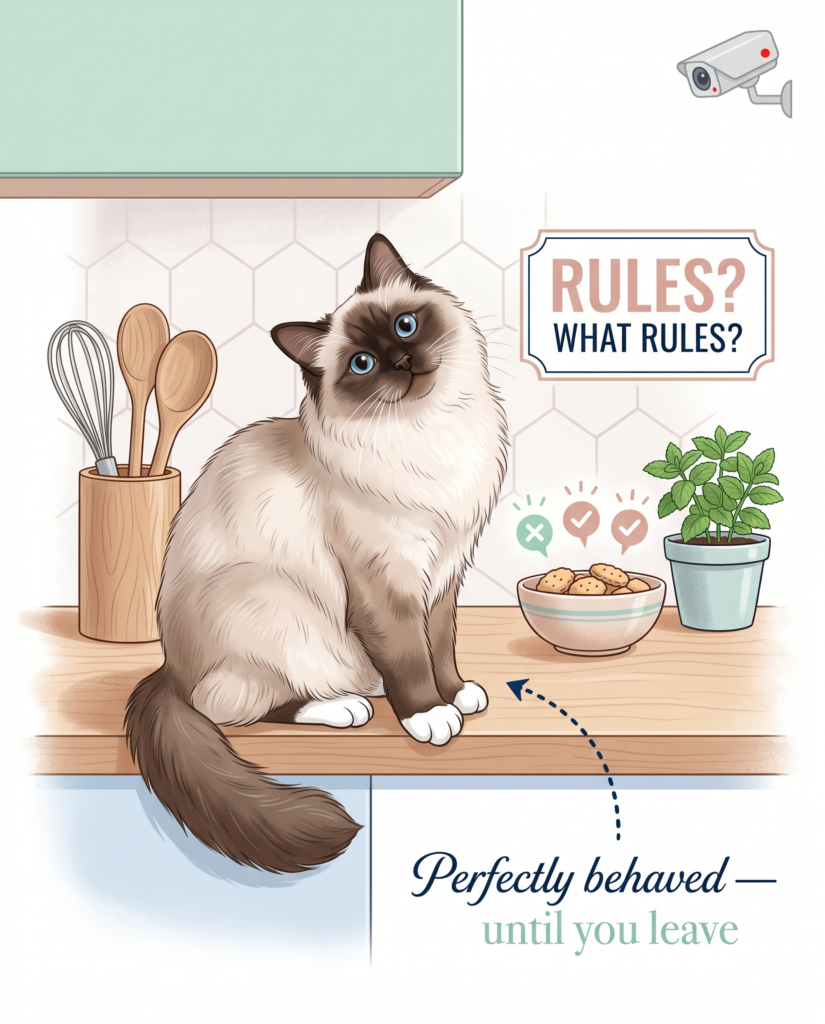
7. Gets Into Things They Ignore When You Are Home
Cats who are perfectly well-behaved in their owner’s presence are frequently captured on hidden cameras engaging in behaviors they clearly know are not permitted when their owner is watching. Counter surfing, investigating the contents of bags and cupboards, sleeping on forbidden furniture, and rearranging objects are all commonly observed. This is not defiance it is simply a cat operating without the social inhibitions that their owner’s presence creates. Cats are socially intelligent enough to understand that certain behaviors produce negative responses from their owners, and they adjust their behavior accordingly when observed. When unobserved, they simply follow their curiosity without the social filter. Rather than being frustrating, this behavior is actually a testament to your cat’s social awareness and intelligence.
8. Plays — Even Alone
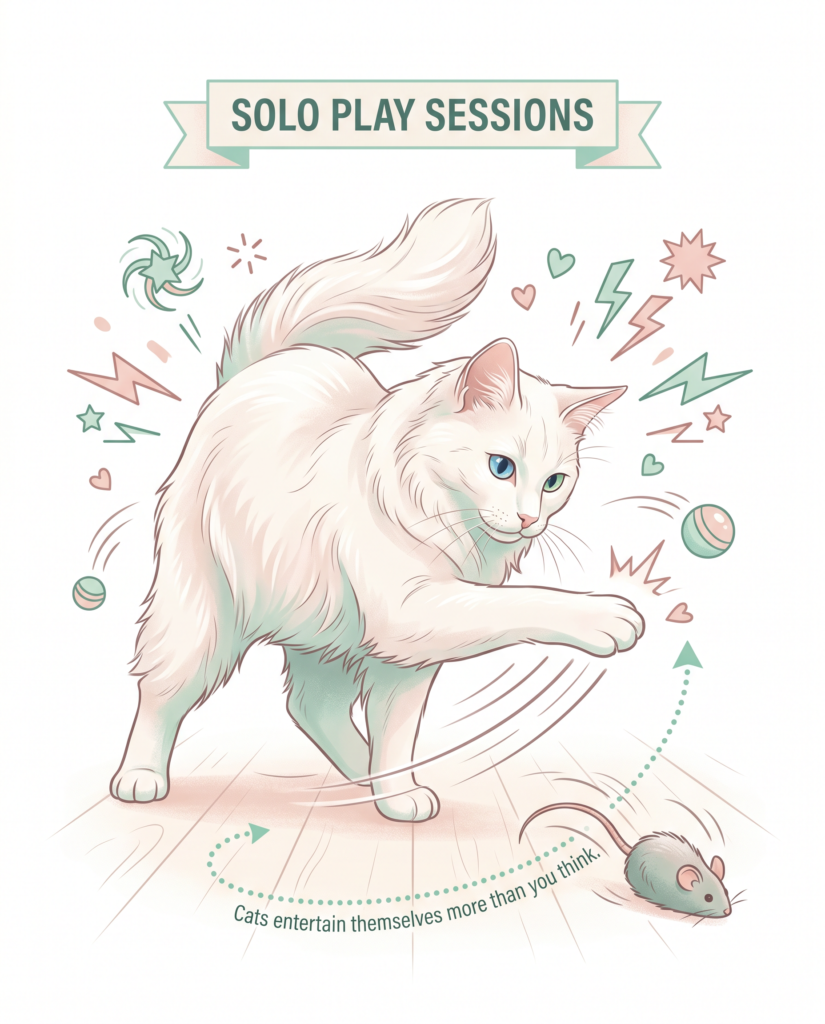
Contrary to the assumption that cats only play when stimulated by their owners or other pets, hidden cameras frequently capture cats engaging in extended solo play sessions. Cats will bat toys around, chase their own tails, pounce on imaginary prey, and create their own entertainment for surprisingly long periods during owner absence. This self-directed play is an important outlet for hunting instinct and physical energy. Cats who have access to a variety of toys particularly those that move unpredictably, like battery-operated mice or balls engage in significantly more solo play than cats with limited or boring toy options. Rotating toys regularly so that they seem “new” dramatically increases the likelihood of solo play during owner absence.
9. Monitors and Interacts With Other Pets
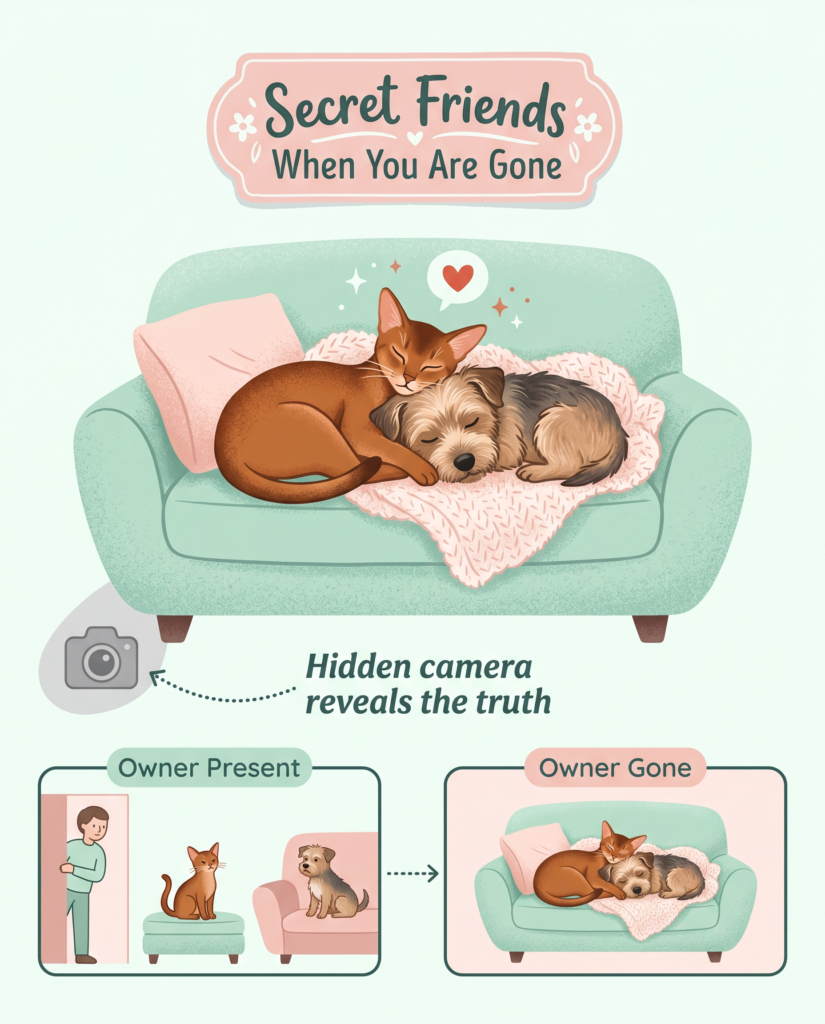
In multi-pet households, the social dynamics between animals change significantly when the human members of the household are absent. Hidden cameras have captured cats and dogs who appear largely indifferent to each other in their owner’s presence engaging in playful interactions, mutual grooming, and companionable resting together when alone. Conversely, cats who appear to tolerate each other well in front of their owners have been observed engaging in territorial disputes, resource guarding, and stress behaviors when unobserved. The presence of humans significantly influences how pets interact with each other removing that influence reveals the true nature of inter-pet relationships that owners may never otherwise see.
10. Misses You — More Than You Realize
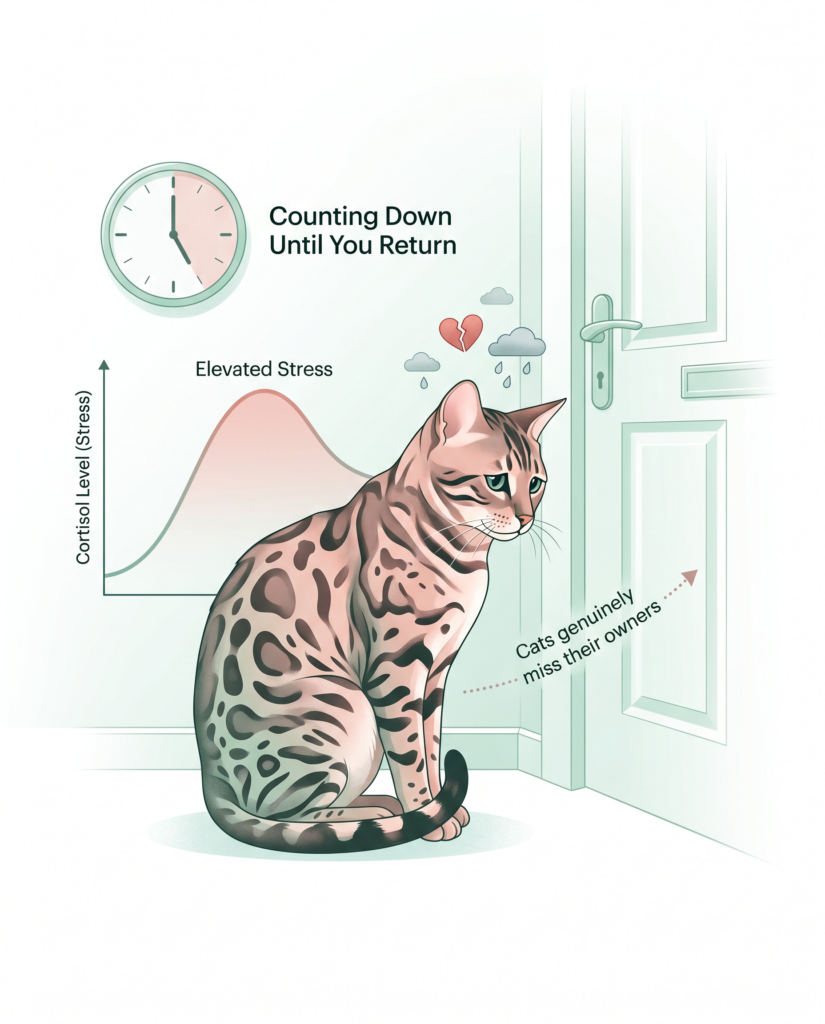
Perhaps the most significant finding from research into cat behavior during owner absence is that cats do genuinely miss their people. Studies measuring cortisol levels a biological marker of stress have found that cats show elevated stress indicators during extended owner absence. Research published in peer-reviewed journals has demonstrated that cats form genuine attachment bonds with their owners that are comparable in many ways to the attachment bonds observed in dogs and even human infants. When owners return after a period of absence, many cats display clear reunion behaviors increased vocalization, rubbing, following, and seeking physical contact that parallel the reunion behaviors observed in securely attached individuals across species. Your cat may not greet you at the door with the exuberance of a dog but they notice when you are gone, and they notice when you come back.
The next time you leave for work, know that your cat’s day is far richer, more complex, and more emotionally meaningful than a simple nap on the sofa. They are living a full feline life and counting down until you come home.